


The digital asset market is entering a new cycle, moving toward practical applications, institutional capital and higher requirements for compliance and transparency. In this context, identifying trends correctly, seizing opportunities and managing risk have become decisive.
This was the main theme of the seminar "Trends, Opportunities and Risk Management in Digital Assets," organized by the Vietnam Blockchain and Digital Assets Association (VBA) on June 4, with the support of VMatrix, Tether Financial Group and the ABAII Institute of Blockchain and Artificial Intelligence Technology.
In her opening remarks, Ms. Nguyen Van Hien, Vice Chairwoman and General Secretary of VBA, said the legal framework for digital assets in Vietnam is being completed rapidly. To prepare for the market's breakthrough growth, the capabilities of its participants must develop at a matching pace. Proactive study and capacity building not only help businesses and investors understand the technology correctly and see the full range of risks, but are also a prerequisite for adapting to new requirements on compliance, governance and market operation.
To that end, VBA and the ABAII Institute have delivered many training programs on blockchain, AI and crypto assets for government agencies, financial institutions and individuals, including Vietcombank, BIDV, Techcombank, MSB and the Vietnam-Russia Joint Venture Bank. In particular, ABAII has worked with the Securities Research and Training Center (State Securities Commission) to run in-depth courses on blockchain and crypto assets, helping participants understand the market correctly, strengthen their risk management capabilities and prepare for new opportunities in the digital economy.
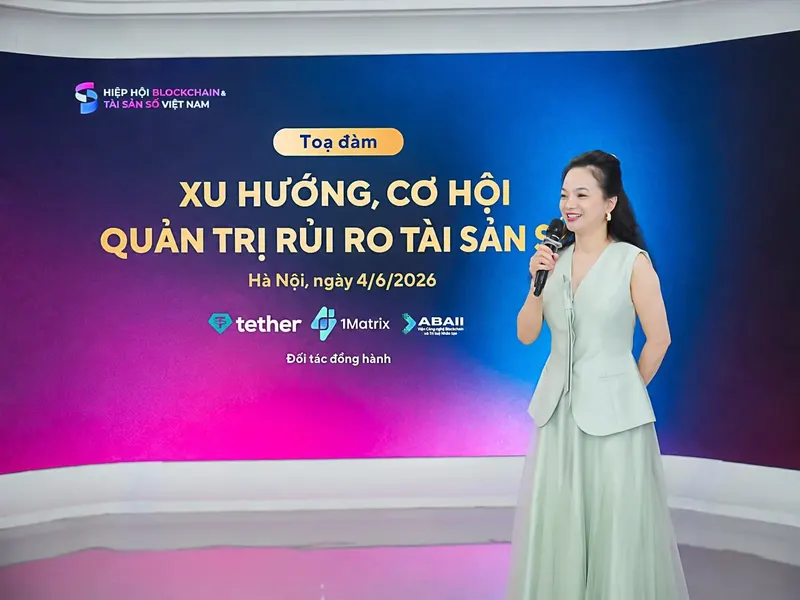
Ms. Nguyen Van Hien stressed the importance of capacity-building training as the digital asset market develops.
Global trends in real-world asset tokenization
Tokenized real-world assets (RWAs) are emerging as one of the most promising trends in the blockchain industry, with an estimated market size of up to USD 46.2 trillion by 2035, according to a BCG report. Mr. Nghiem Minh Hoang, Director of Strategy at VMatrix and FinTech Application Expert at VBA, said blockchain technology makes it possible to bring many kinds of traditional assets, such as gold, bonds, real estate and commodities, into the digital environment, expanding access and improving liquidity.
Beyond connecting traditional financial markets with digital infrastructure, this model also opens access to large asset classes that were previously available mainly to institutions, while increasing liquidity and widening companies' ability to raise capital.
One representative example is Tether Gold, tokenized gold developed by the technology group Tether. Each token is backed by one ounce of physical gold held in internationally certified vaults in Switzerland. The product preserves the role of traditional physical gold as a store of value and a hedge, while removing many barriers to storage, trading and flexible transfer, in the way of modern digital assets.
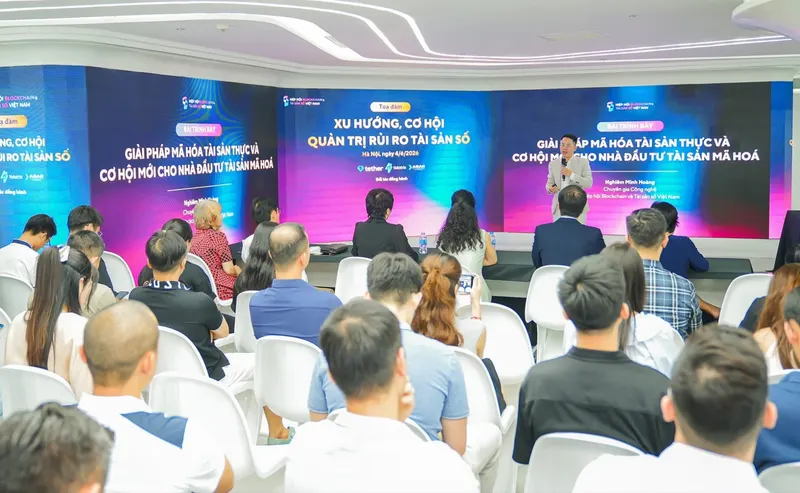
According to Mr. Nghiem Minh Hoang, by 2035 RWAs could account for about 10-16% of total global investable assets.
According to Mr. Nguyen Van Chinh, Chairman of DDC Holdings, crypto assets are moving fast, reflecting a process of development after more than a decade of growth and filtering. In 2016-2018, the market was led by the wave of crypto fundraising (ICOs); the 2020-2021 cycle saw an explosion of decentralized finance (DeFi), non-fungible tokens (NFTs) and decentralized financial models.
In the current phase, the market is gradually maturing, with financial institutions, investment funds and major technology groups taking a clearer part, bringing new layers of financial infrastructure alongside the growth of stablecoins and RWAs. Rather than focusing on short-term trends, capital is shifting toward models that can create real value, have concrete applications and are tied to the needs of the economy. Investors therefore also need to build their ability to evaluate projects, manage risk and adapt to changes in technology and legal policy.

Mr. Nguyen Van Chinh forecast that digital assets will become a new layer of financial infrastructure in the coming period, with the growth of stablecoins, RWAs and more.
What investors need to prepare for the digitalization era
If earlier cycles were seen as a period when the market developed faster than most investors could adapt, the coming period is expected to be a competition in analytical ability, long-term thinking and risk management.

(From left to right) Mr. Le Anh Quoc, Mr. Do Anh Tuan, Ms. Khuat Bich Thuy and Ms. Do Thi Thu Ha take part in the discussion on what investors need to prepare for the digitalization era.
Ms. Khuat Bich Thuy, Director of Legal and Licensing at Tether Vietnam, assessed that the global digital asset market is entering a phase of comprehensive regulation and rigorous enforcement. Major economies have completed legal systems that clearly define the rules of the game, notably the European Union (EU) with the MiCA regulation; the United States with the CLARITY Act and the GENIUS Act; and Georgia with new, strict rules on managing VASPs and stablecoins.
As a result, valuing a project today cannot rest only on its potential for price appreciation. Investors need to consider four key factors: the operating license; public disclosure and verification of assets; the system for controlling technology risk and security keys; and the executive team.
From a technology perspective, Mr. Le Anh Quoc, Technology Expert at VBA, sees the biggest difference between individual investors and professional investment funds in how they conduct project due diligence. While most individual investors tend to focus on price volatility or short-term information, professional institutions spend much more time evaluating the technology, business model, development team and ability to create real value.
"Foundational knowledge of blockchain, digital assets, operating models and risk management will help investors limit emotional decisions and improve their ability to recognize the market's real opportunities," Mr. Quoc said.
Mr. Do Anh Tuan, Director of Training at RWA Edu, said that before entering the digital asset market, investors need to define their risk appetite clearly and build a systematic knowledge base. Sustainable investing capability should rest on three pillars: legal understanding; technology, meaning the investment method and the analytical tools that support it; and risk management capability. However, self-study to master all three at once is far from easy, especially in a fast-changing field like blockchain and digital assets.
Mr. Tuan therefore advised investors to curb short-term speculative thinking and instead focus on building a long-term investment mindset through formal training programs run by reputable and qualified organizations.
The experts also agreed that the role of communities and networks is becoming increasingly important. Joining reputable professional communities not only helps investors stay up to date on new market information and trends, but also creates opportunities to exchange experience, improve their evaluation skills and refine their investment methods over the long term.