

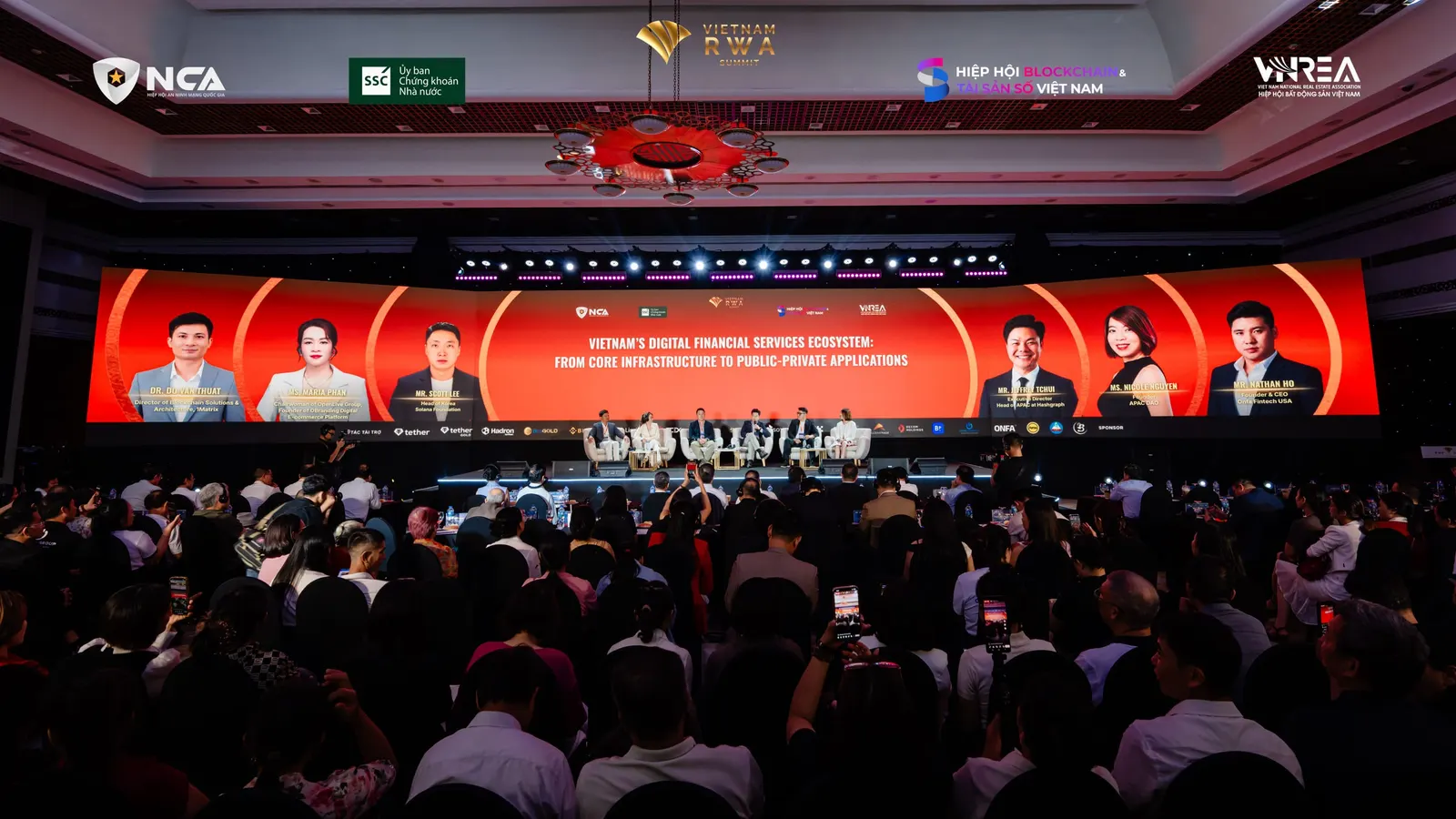
More than 24,000 online scams causing losses of nearly VND 40 trillion between 2020 and 2025 mean that the growth of crypto assets must be matched by the ability to protect users. Safety, security and risk management must become a requirement across the entire ecosystem, laying the foundation for a market that operates transparently, reliably and sustainably.
The Vietnam Real-World Asset Tokenization Summit 2026 (Vietnam RWA Summit 2026) took place on July 18–19 in Hanoi, bringing together more than 5,000 delegates from legislative and state management bodies such as the National Assembly, the Ministry of Public Security, the Ministry of Finance, the State Bank of Vietnam, the Ministry of Justice, the Ministry of Science and Technology and the Ministry of Home Affairs, among others, as well as representatives of technology companies and large financial institutions in Vietnam and abroad.
The program was jointly organized by the State Securities Commission of Vietnam (SSC), the Vietnam Blockchain and Digital Assets Association (VBA), the National Cybersecurity Association (NCA) and the Vietnam Real Estate Association (VNREA). It focused on discussing and contributing to the refinement of the institutional framework, building operating infrastructure, ensuring system safety and expanding the use of blockchain technology in the real economy.
In the second working session, themed “The Key to Breakthrough Liquidity,” presentations and discussions centered on tokenization solutions, valuation, custody, on-chain trading, multilateral cooperation and the readiness of Vietnamese enterprises. Security was identified as the core condition for liquidity to form sustainably, from asset verification, identification of parties and cryptographic key management to the protection of data, transactions and investors.
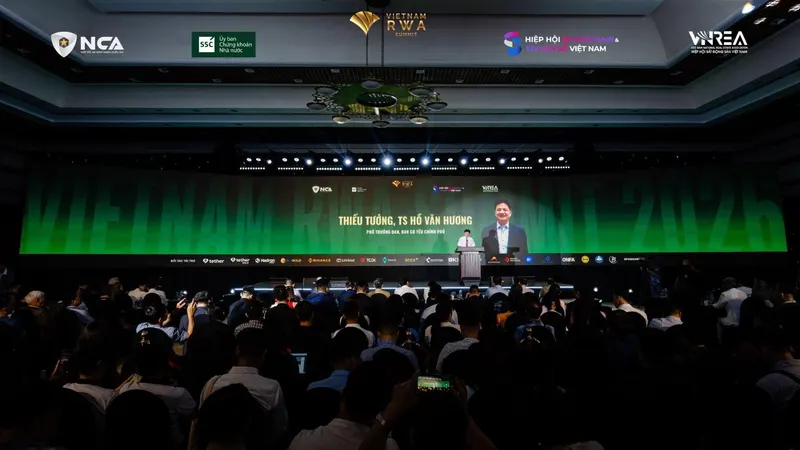
Major General Dr. Ho Van Huong, Deputy Head of the Government Cipher Committee, delivers the opening remarks of the second session of Vietnam RWA Summit 2026, themed “The Key to Breakthrough Liquidity,” held on the afternoon of July 18 in Hanoi.
Security must be designed in from the foundation
In his opening remarks, Dr. Ho Van Huong, Deputy Head of the Government Cipher Committee, said that the development of the RWA and digital asset market cannot rely solely on digitizing assets or moving transactions into the digital environment. The foundation of the market also lies in the ability to verify assets, protect transactions and reliably identify the participants.
In his view, Vietnam needs to soon establish a system of standards and technical regulations for blockchain platforms and asset tokenization activities, while strengthening digital identification and authentication infrastructure and cryptographic technology. This is the basis for systems to connect and operate safely, to define the responsibilities of each party and to support supervision.
Major General Ho Van Huong also noted that blockchain can protect data once it has been recorded but does not by itself guarantee the accuracy of input data. Standardizing data sources, building verification mechanisms and strengthening coordination among regulators, technology companies, financial institutions and specialist units are therefore important conditions for forming a digital infrastructure that is safe, synchronized and interoperable.
Sharing this view, Dr. Can Van Luc, Chief Economist at BIDV and member of the National Financial and Monetary Policy Advisory Council, observed that the rapid growth of the crypto asset market is bringing several groups of risk, from legal, ownership, technology and cybersecurity risks to liquidity, valuation and money laundering risks and the potential for contagion into the traditional financial system. Crypto assets therefore need to be classified and managed according to their economic nature and level of risk, rather than under one common framework.
Service providers must ensure that customer assets are segregated, reserves are transparent and liquidity management is strengthened, and must have a plan for handling insolvency. Inter-agency coordination and cross-border information sharing mechanisms need to be strengthened to limit supervisory gaps in a market that is highly cross-border.
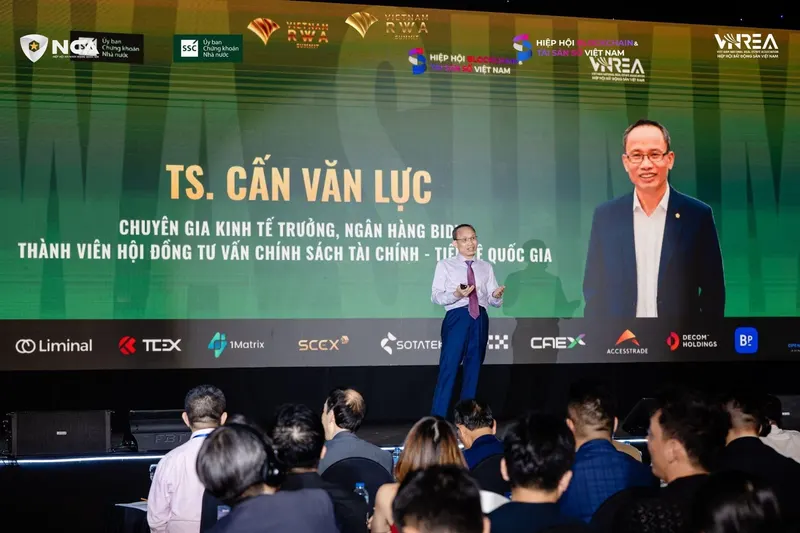
Dr. Can Van Luc speaks on risk management in the crypto asset market.
Trusted infrastructure determines how far liquidity can scale
Drawing on international deployment experience, Mr. Francesco Ranieri Fabracci, Director of Tokenization Development at Tether, analyzed the shift from stablecoins to tokenized capital markets. The popularity of stablecoins shows that a financial asset can be issued and circulated on blockchain at large scale. However, extending this model to bonds, investment funds, real estate or commodities requires systems to handle ownership, compliance, security and connectivity with financial institutions all at once.
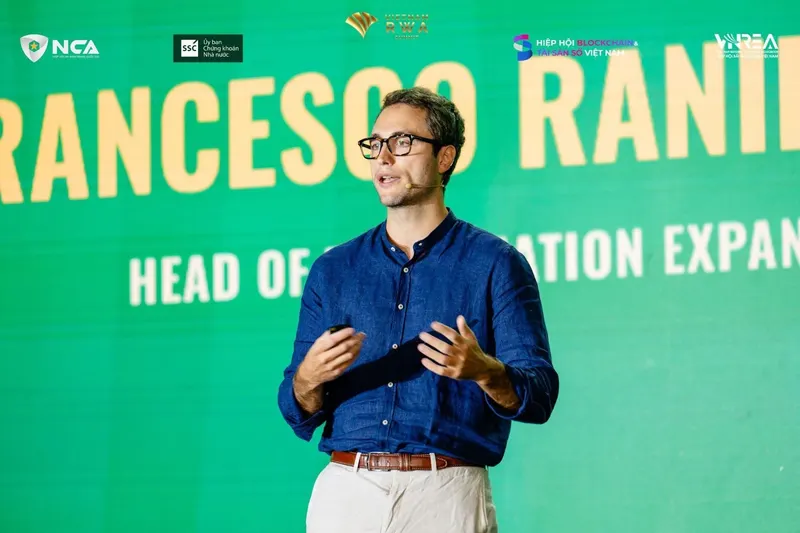
Mr. Francesco Ranieri Fabracci offers his perspective on infrastructure for tokenized capital markets.
He cited the real-world example of Hadron, a Tether platform that manages the entire lifecycle of tokenized assets, from issuance and management to transfer. The system is designed with compliance components, institutional-grade security, API integration and operation across multiple blockchain networks. This helps lower minimum investment size, digitize know-your-customer (KYC) processes, cut settlement time from T+2 or T+3 to near-instant, and improve real-time asset tracking.
“Faster transaction speeds also mean less time to detect and respond to incidents. Requirements for identity, access rights, transaction controls and compliance therefore cannot be handled manually after a transaction has taken place. These rules need to be built directly into the platform architecture and the token lifecycle,” Mr. Fabracci stressed.
Following this perspective, Mr. SB Seker, APAC Regional Director at Binance, said that innovation can scale only when it rests on market infrastructure that is trusted enough, where users, financial institutions and regulators alike have confidence in how it operates. In his view, although each country chooses a different regulatory model, the core principles converge on legal clarity, technology neutrality, risk management, user protection and preserving market integrity.
For Vietnam, Mr. SB Seker said that Resolution No. 05/2025/NQ-CP and the international financial centers in Da Nang and Ho Chi Minh City create conditions to move from building a framework to developing the market. Notably, the Da Nang International Financial Center is aiming to tokenize nearly USD 4 billion in infrastructure projects, opening another channel connecting international capital with assets and investment demand in the real economy.
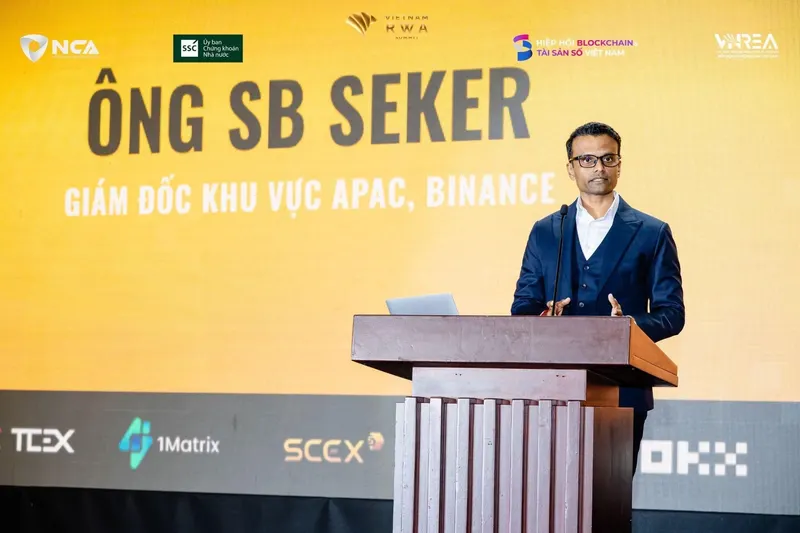
Mr. SB Seker outlines the conditions for building a trusted digital financial ecosystem.
From an application perspective, the BIGOD tokenized gold model was presented as a typical case of linking backing assets, blockchain infrastructure and usage needs in the market. According to Ms. Mahek Kewlani, Regional Director for the Middle East & North Africa (MENA) at BIGOD, each token is tied to physical gold, and the ecosystem is aimed at functions such as OTC trading, peer-to-peer exchange, collateral, payments and e-commerce.
This approach shows that the value of RWA does not stop at creating a digital record that represents an asset. For a token to be used and circulated, the market must ensure it can be reconciled against the underlying asset, and needs custody mechanisms, auditing and independent verification, as well as a sufficiently large network of partners and users. Safety therefore covers technology safety, the safety of backing assets and transparency across the entire product lifecycle.
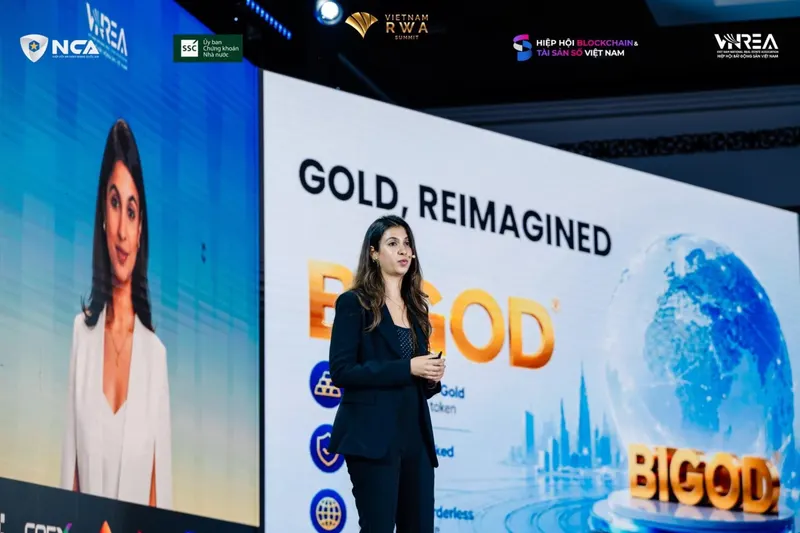
Ms. Mahek Kewlani speaks on the potential of tokenized gold.
Controlling risk across the crypto asset lifecycle
Although views differ on RWA and crypto assets as new asset classes, the experts all agreed that controlling risk across the entire crypto asset lifecycle is the top priority.
At the discussion session “Digital Asset Safety: From Traditional Markets to On-Chain Trading in the AI Era,” Mr. Varun Chugh, Financial Advisor at BIGOD, said the company distributes gold custody across several countries, separates the legal entity that holds the physical gold from the entity that issues the tokens, and carries out security verification and independent audits to limit the impact of token-layer incidents on the underlying assets.
From the asset layer, Mr. Marc Krisjanou, Founder and Financial Advisor of Zanarc, noted that standards such as ISO 27001 and SOC 2 cover only baseline cybersecurity controls and do not fully address blockchain-specific features such as key management, multisignature wallets, bridges and transaction immutability. Platforms therefore need to apply additional Web3-specific standards, while also controlling the risks when AI is used in code development, transaction signing, system operations and vendor management.
At the source code level, Mr. John Kiew, Director of Business Development for Southeast Asia at CertiK, stressed that smart contract auditing cannot address every risk, because it mainly detects vulnerabilities before deployment. Projects should be verified for their team and transparency, publish their audit results and be re-audited when major deployment changes occur.
From an operations standpoint, Mr. Du Cong Thanh, Director of Global Market Development at SotaTek, said systems must be built on enterprise-grade infrastructure, with on-chain and off-chain data, access rights and the responsibilities of each party clearly delineated. Along with scalability, high availability, backup and disaster recovery, systems must ensure auditability, traceability and adaptability when the network or smart contracts are upgraded.
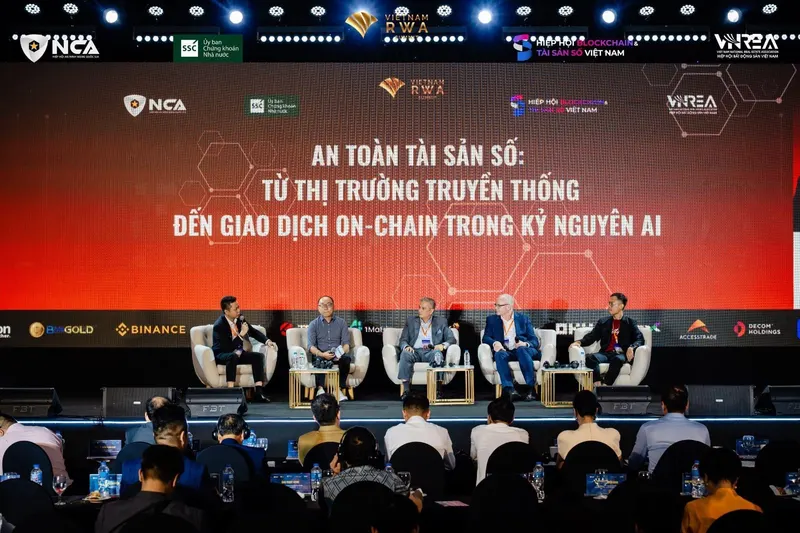
Experts at the discussion session “Digital Asset Safety: From Traditional Markets to On-Chain Trading in the AI Era.”
At the session “Where Do Vietnamese Businesses and Investors Stand in the Crypto Asset Wave?”, views focused on the readiness of domestic market infrastructure. Mr. Luu Minh Trung, Director of Product Development at Techcom Crypto Asset Exchange Joint Stock Company (TCEX), and Ms. Riley Tran, Director of Strategy at Sacom Crypto Asset Exchange Joint Stock Company (SCEX), shared product development directions for domestic exchanges that meet requirements for technology capability, customer identification, compliance and investor protection at once. Mr. Justin Lim, Director of Institutional Client Sales at Liminal Custody, stressed that custody, key management and segregation of customer assets are conditions for attracting institutional capital.
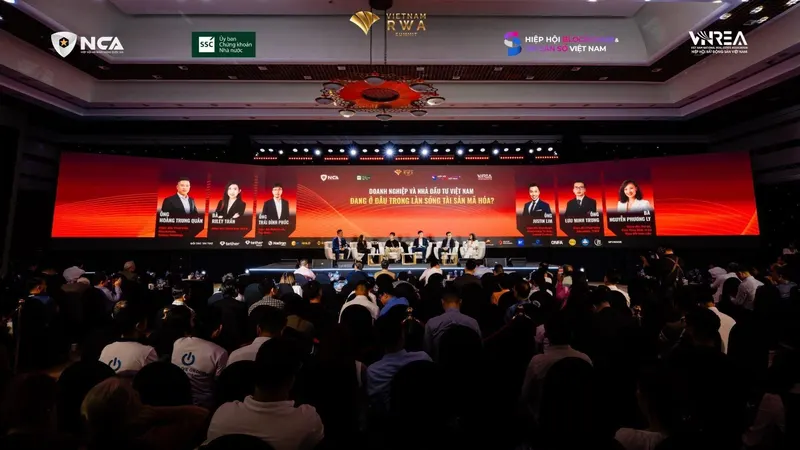
Representatives of businesses and market platforms at the session “Where Do Vietnamese Businesses and Investors Stand in the Crypto Asset Wave?”.
At the session “Multilateral Cooperation to Realize the RWA Market: The Key to Breakthrough Liquidity, 2026–2030,” experts said that liquidity can form only when the components, from blockchain, stablecoins and exchanges to custody and the traditional financial system, are connected on common standards for data, compliance and security.
Participants in the session included Mr. Teddy Hung, Director of Business and Advisory at Solana Company; Mr. Paulo Caperig, Director of Partner Development at Kaia Foundation; Mr. Thomas Chou, Director of APAC Regional Development at Canton Foundation; Mr. Ramana Kumar, Chairman of the Stablecoin Ecosystem at ADI Foundation; and Ms. Vu Tran Ai Tam, Director of Business Development at OKX Global.
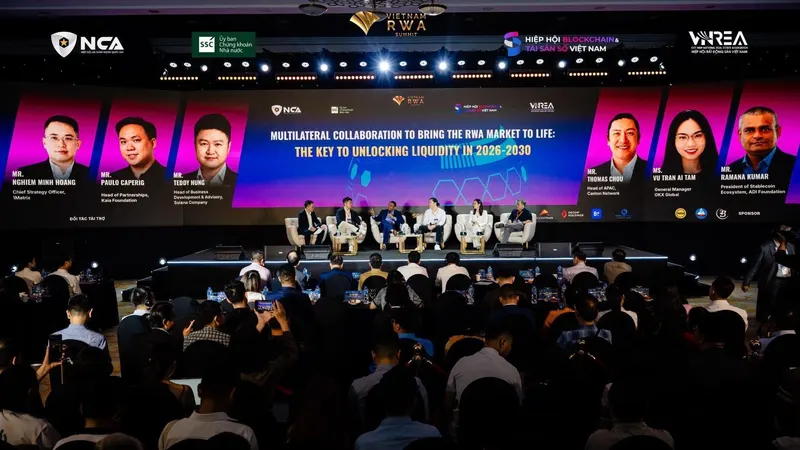
Representatives of international blockchain and financial organizations at the session “Multilateral Cooperation to Realize the RWA Market: The Key to Breakthrough Liquidity, 2026–2030”.
In the earlier session, Mr. Bui Hoang Hai, Vice Chairman of the State Securities Commission of Vietnam, observed that RWA is emerging as one of the trends with the greatest influence on global finance, helping unlock resources that are still “dormant” in the economy. For Vietnam, as demand for capital for infrastructure, manufacturing, innovation and digital transformation keeps growing, this is a direction with great potential that should be studied seriously and deployed prudently with a long-term vision.
Vietnam Real-World Asset Tokenization Summit 2026: The Meeting Point for Vietnam's Digital Assets Vietnam RWA Summit 2026 is a multilateral dialogue forum on policy and market practice, focused on identifying the key institutional, infrastructure and implementation-capacity conditions needed to advance the digital asset market. In doing so, the event helps expand opportunities for Vietnam to become a new destination for capital, technology and digital finance models in the region. The summit comprises three working sessions over two days, July 18–19, 2026. Session 1 discussed the legal framework for crypto assets and RWA, risk management, anti-money laundering, cybersecurity and public–private coordination. Session 2 focused on tokenization solutions, multilateral cooperation to expand RWA liquidity, the readiness of enterprises and investors, and the requirements for ensuring digital asset safety. Session 3 focused on the tokenized real estate market, Web3 infrastructure, the digital financial services ecosystem, blockchain applications in commerce and workforce development. The summit was supported by major partners in Vietnam and abroad, including Tether, Binance, BIGOD, OpenLive, OKX, Liminal Custody, Aifin Technologies Holdings, SotaTek, Techcom Crypto Asset Exchange (TCEX), Vietnam Thinh Vuong Crypto Asset Exchange (CAEX), Lam Dong Irrigation Construction Company, Sacom Crypto Asset Exchange (SCEX), Polaris Holdings, ONFA and AccessTrade. |