

Real-world asset tokenization can become a new way to raise capital, helping achieve the double-digit growth target set by the Politburo's Resolution No. 57-NQ/TW. The necessary condition is market infrastructure that ensures legal validity, transparency and verifiability.
On July 18, 2026, the Vietnam Real-World Asset Tokenization Summit 2026 (Vietnam RWA Summit 2026) officially opened with more than 3,000 delegates from legislative and state management agencies, including the National Assembly, the Ministry of Public Security, the Ministry of Finance, the State Bank of Vietnam, the Ministry of Justice, the Ministry of Science and Technology and the Ministry of Home Affairs, along with representatives of technology companies and major financial institutions at home and abroad.
The two-day program was jointly organized by the State Securities Commission of Vietnam (SSC), the Vietnam Blockchain and Digital Assets Association (VBA), the National Cybersecurity Association (NCA) and the Vietnam Real Estate Association (VNREA).
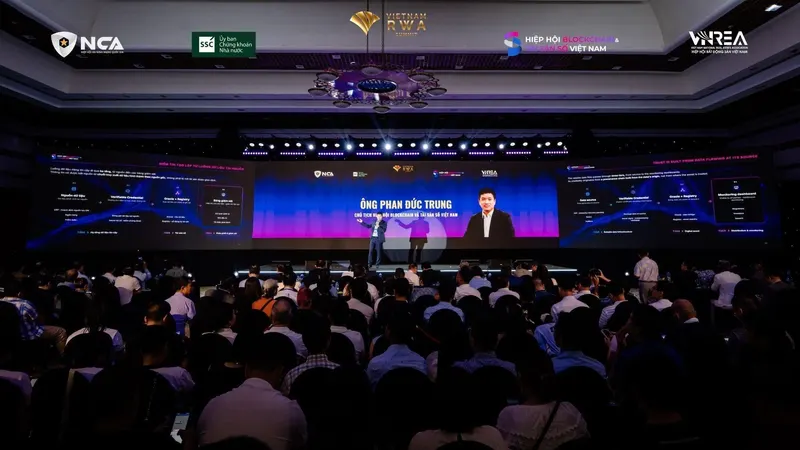
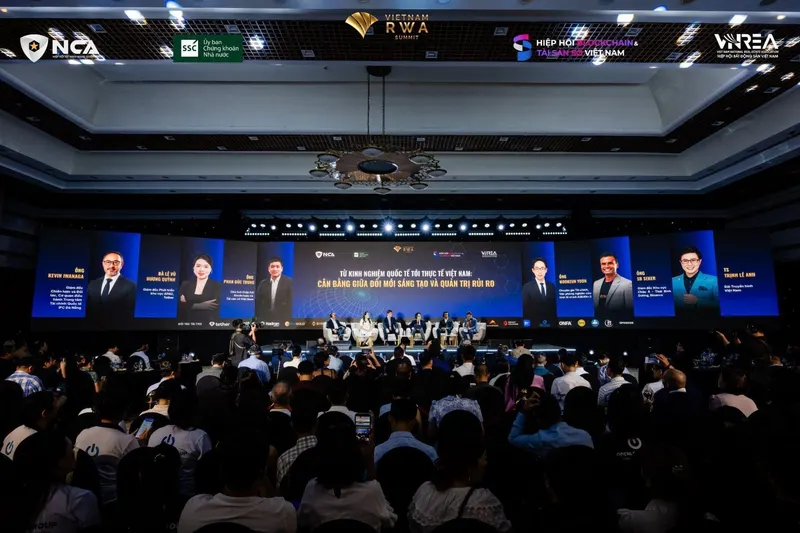
Overview of the opening session of the Vietnam RWA Summit 2026 on the morning of July 18, 2026 in Hanoi, drawing more than 3,000 domestic and international delegates.
A shift in regulatory thinking and building an infrastructure of trust for the digital asset market
In his opening remarks, Mr. Bui Hoang Hai, Vice Chairman of the SSC, observed that RWA is emerging as one of the trends with major influence on global finance, unlocking resources that remain “dormant” in the economy. For Vietnam, with growing capital needs for infrastructure, manufacturing, innovation and digital transformation, this is a direction rich in potential that should be studied seriously and implemented prudently with a long-term vision. However, he also stressed that the crypto asset market in general, and RWA in particular, can grow sustainably only when built on a clear legal basis, transparent cash flows, safe infrastructure and protected investors.
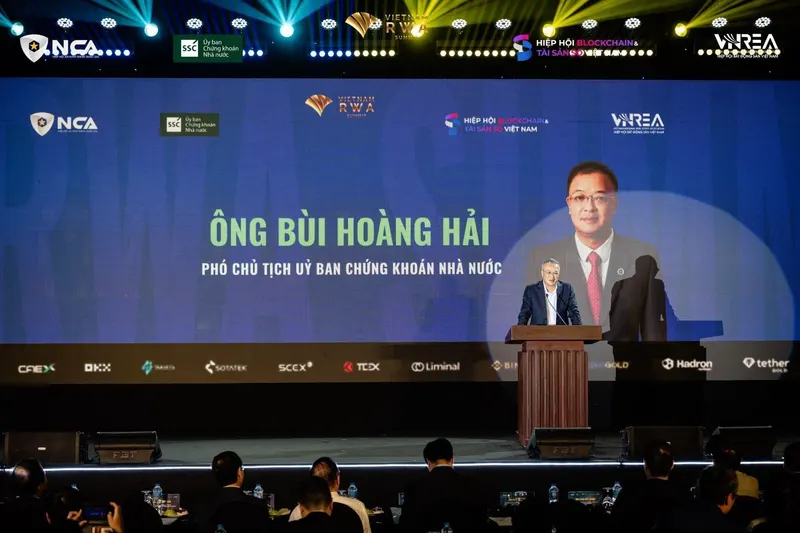
Mr. Bui Hoang Hai, Vice Chairman of the State Securities Commission, delivering the opening remarks at the Vietnam RWA Summit 2026.
On cybersecurity, Colonel Dr. Nguyen Hong Quan, Deputy Director of the Department of Cybersecurity and High-Tech Crime Prevention (A05), Ministry of Public Security, said a digital asset ecosystem can develop over the long term only when built on a secure technology foundation, with protected data, transparent transactions, clearly accountable parties and guaranteed lawful rights and interests of citizens and businesses.
“The position of the Ministry of Public Security in general, and of the cybersecurity and high-tech crime prevention force in particular, is that cybersecurity is not a barrier to innovation. On the contrary, cybersecurity is the very condition for innovation to grow sustainably and for building trust in the market,” Colonel Hong Quan said.
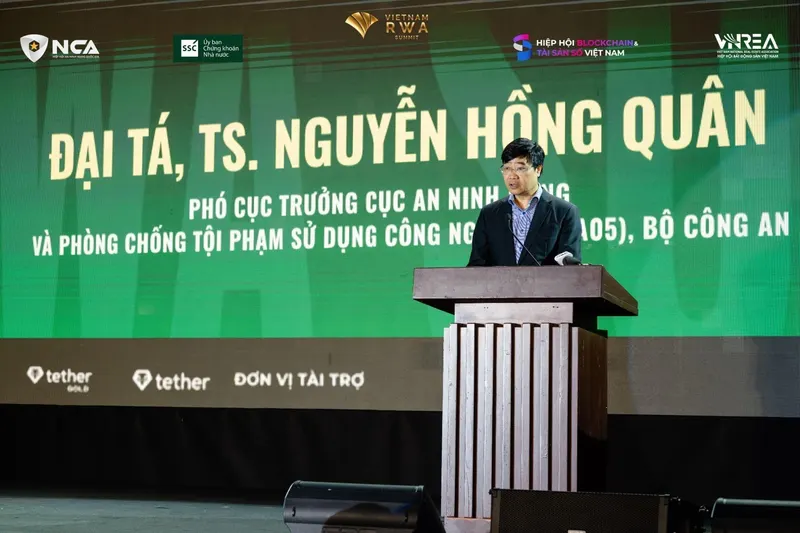
Colonel Dr. Nguyen Hong Quan, Deputy Director of A05, Ministry of Public Security, speaking at the conference.
Clarifying the technical risks, Senior Lieutenant Colonel Dr. Nguyen Thanh Chung of the Department of Cybersecurity and High-Tech Crime Prevention (A05), Ministry of Public Security, said that from 2020 to early 2025 the world recorded more than 660 cyberattacks in the crypto asset sector, causing losses of nearly USD 13 billion. Since the start of 2026 alone, losses have continued at about USD 800 million. The risks stem mainly from blockchain's new technical characteristics, limited cybersecurity investment, human weaknesses and the market's growing appeal to cybercriminals. Attacks tend to target wallets, exchanges, bridges and blockchain applications, which calls for stronger assessment, monitoring and incident response for pilot systems.
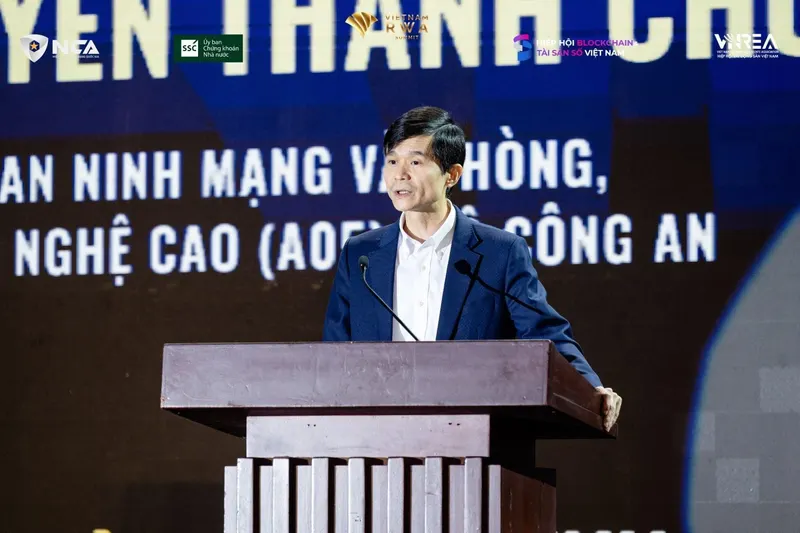
Senior Lieutenant Colonel Dr. Nguyen Thanh Chung, A05, Ministry of Public Security, on cybersecurity risks in the crypto asset sector.
Senior Lieutenant Colonel Le Thi The Hoang, Deputy Head of Division 2, Department of Criminal Police for Investigating Corruption, Economic and Smuggling Crimes (C03), Ministry of Public Security, warned of schemes that set up token projects and create fake liquidity with bots and fake accounts to lure investors, then “dump” assets or crash the system. Crypto assets are also exploited for money laundering through multiple layers of intermediaries, blockchain platforms and international exchanges to hinder tracing. In her view, the requirement is not only to handle violations but also to raise the capacity for early detection, cash-flow monitoring and coordination among regulators, law enforcement and organizations in the ecosystem.
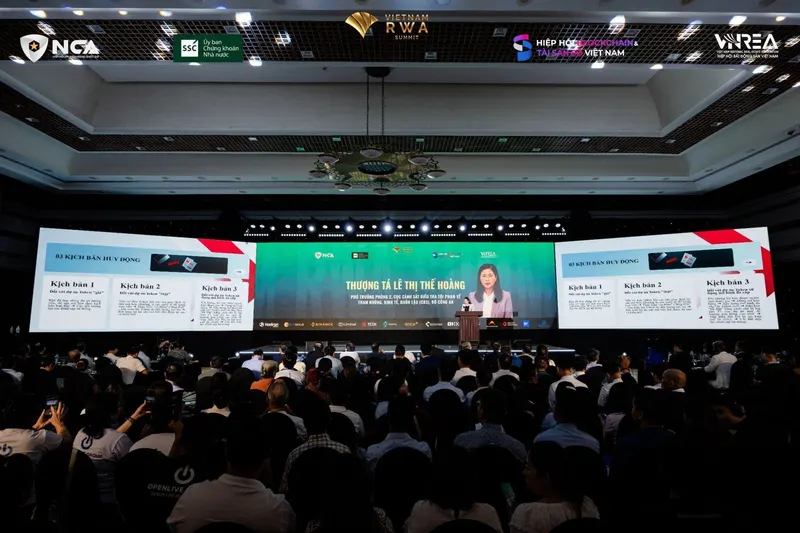
Senior Lieutenant Colonel Le Thi The Hoang, Deputy Head of Division 2, C03, Ministry of Public Security, warning of criminal conduct involving crypto assets.
If a legal framework is a necessary condition, trusted data infrastructure is the sufficient one for the market to develop and deliver the expected results. Mr. Phan Duc Trung, Chairman of the Vietnam Blockchain and Digital Assets Association, said capital flows into RWA rose about 300% in 2025, significantly higher than other asset groups. However, the obstacle keeping the market from developing in line with its potential lies not in tokenization technology but in the fact that trust in the capital market has not yet been fully built.
According to Mr. Trung, blockchain can support the distribution, transfer and settlement of assets, but it cannot create trust on its own or turn a poor-quality asset into a good one. Trust in a token must begin with reliable data on the real asset, verifiable identities of the parties, authenticated information on assets and cash flows, and mechanisms for continuous disclosure, monitoring and supervision.
Therefore, the market structure should be built in sequence: from real assets, to trusted data infrastructure, to digital assets on a suitable legal foundation, and only then tokens and distribution channels. In this structure, an exchange is only one of many channels bringing assets to investors; the decisive issues remain the type of asset distributed, its quality and the verifiability of the underlying data.
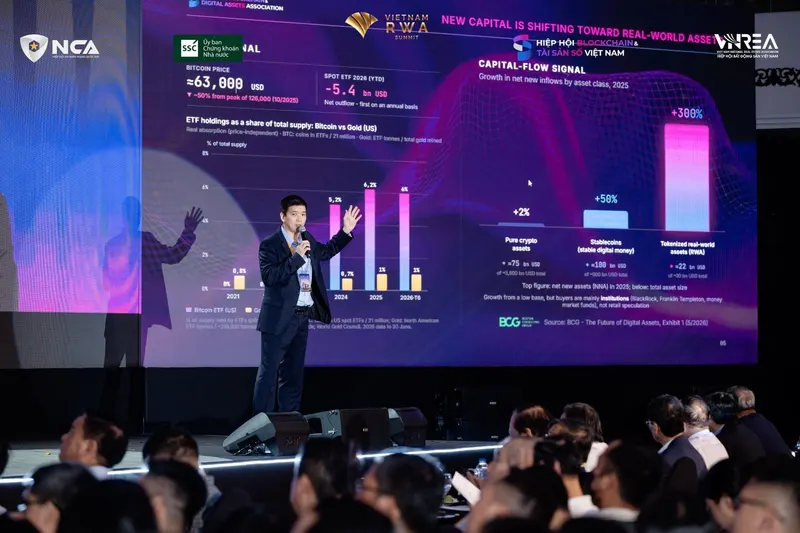
Mr. Phan Duc Trung, Chairman of the Vietnam Blockchain and Digital Assets Association (VBA), on building an infrastructure of trust for the digital asset market.
For Vietnam, Mr. Trung said that within about 10 months the market has seen six documents issued at various levels, from laws and decrees to circulars, while the framework for identification and authentication continues to be prepared. Vietnam also has an advantage in the scale of retail demand, with about USD 200 billion in crypto assets passing through the market and about 17 million wallets or crypto asset holders. This could be an important foundation for developing a digitized capital market, provided that the data layers, digital assets and distribution mechanisms are fully built.
Balancing innovation with risk management
Alongside growth prospects, risk management and system safety are identified as key factors in market development, consistent with the cautious, controlled orientation of Resolution No. 05/2025/NQ-CP.
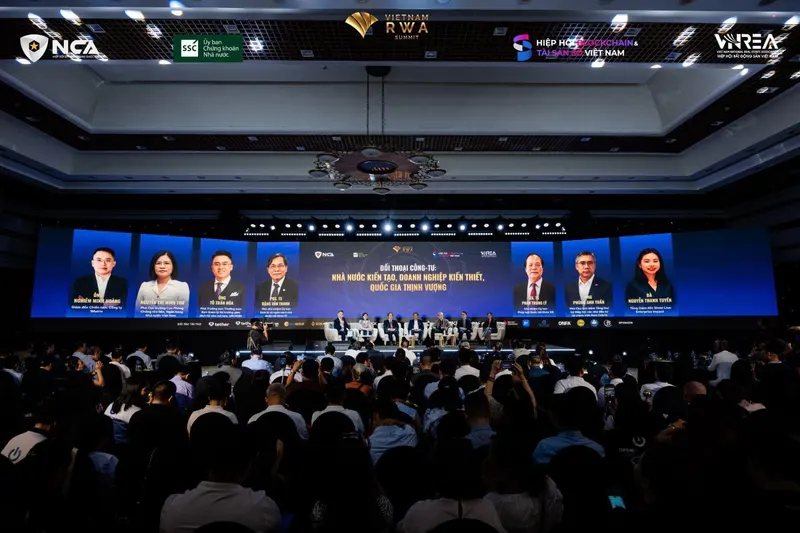
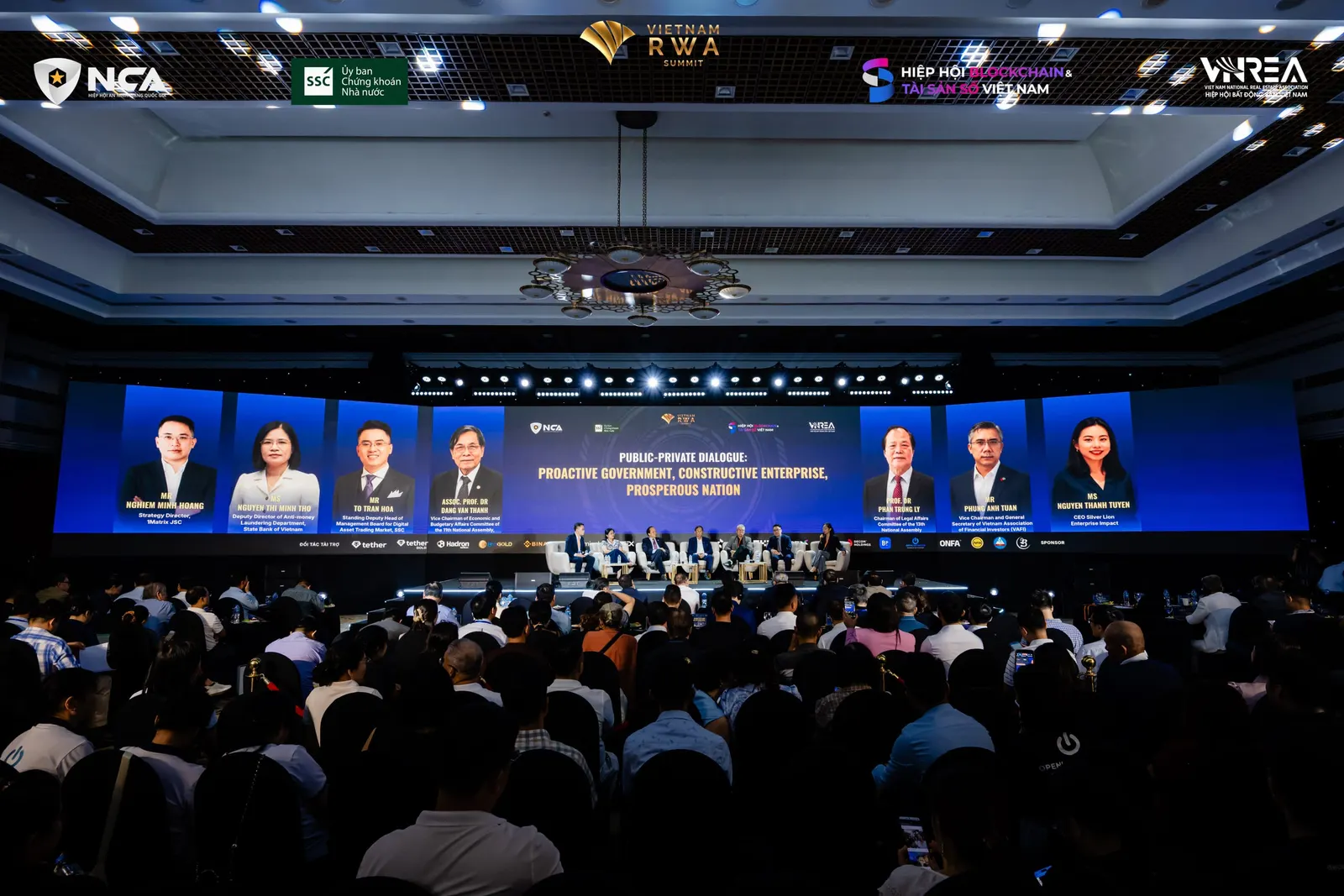
Representatives of regulators, experts and businesses at the discussion “Public–Private Dialogue: The State Enables, Businesses Build, the Nation Prospers.”
At the discussion “Public–Private Dialogue: The State Enables, Businesses Build, the Nation Prospers,” Assoc. Prof. Dr. Dang Van Thanh, Vice Chairman of the Committee on Economy and Budget of the 11th National Assembly, said that dividing and transferring portions of assets on a distributed ledger can facilitate accounting and settlement, access to capital and the ability to mobilize resources from international markets. However, development opportunities must go hand in hand with the ability to identify and manage risk. This requirement applies not only at the level of individual enterprises and economic organizations but also at the level of national governance, to ensure the safety of the financial system and of national finances.
From a legislative perspective, Prof. Dr. Phan Trung Ly, Chairman of the Committee on Legal Affairs of the 13th National Assembly, focused on issues of safety and security of crypto assets and the need to refine the legal framework step by step. The legal framework needs to ensure safety and security while also creating favorable conditions for exchanges.
From the practice of market management, Mr. To Tran Hoa, Deputy Head of the Securities Market Development Department at the SSC, said the current pilot framework is designed to be “both tight and open.” Service providers must meet high requirements for financial capacity and technological safety, while the mechanisms for issuance and for selecting assets to list still leave a certain amount of room for the market. In his view, licensing is only the starting point. More important is building management and supervision capacity once the market formally begins operating, and continuing to refine the legal framework on the basis of practice.
On anti-money laundering, Ms. Nguyen Thi Minh Tho, Deputy Director of the Anti-Money Laundering Department, State Bank of Vietnam, said Vietnam has taken initial steps toward a foundational legal framework for the crypto asset market. However, under FATF requirements, completing the legal framework is only part of the task; Vietnam must also demonstrate effective enforcement in practice. Action 6 is currently assessed as only partially completed, while matters such as how the market operates, how exchanges function, inspection and supervision mechanisms, anti-money laundering and countering the financing of terrorism, and the handling of cases still need to be implemented. She stressed that this is still a long road, requiring coordination between regulators and the private sector.
From international experience to the design of the domestic market structure
Following the policy presentations, the discussion “From International Experience to Vietnam's Reality: Balancing Innovation and Risk Management” broadened the perspective to the practical experience of countries further ahead in the region.
Representatives of domestic and international organizations at the discussion “From International Experience to Vietnam's Reality: Balancing Innovation and Risk Management.”
Mr. Wookeun Yoon, financial expert at the ASEAN+3 Macroeconomic Research Office (AMRO), noted that tokenization does not automatically resolve all the liquidity and valuation limitations of underlying assets. Based on regional experience, many successful RWA products focus on traditional financial assets such as treasury bonds and money market funds, and continue to use proven structures such as funds or special-purpose vehicles. The token is then a digital interest in the structure that holds the underlying assets.
Drawing on Tether's operations, Ms. Le Vu Huong Quynh, Director of Regional Development for Asia-Pacific, said that once a legal framework is in place, the question businesses care about is choosing a model that can create value and profit. She cited the USDT stablecoin, which has expanded from an intermediary tool between exchanges into payment processing, cross-border remittance and settlement among businesses. For tokenized assets, the ability to connect to international liquidity sources is a necessary condition for reaching global investors and capital.
Mr. SB Seker, Director for Asia-Pacific at Binance, stressed that products must be designed around users' real needs. If targeting international capital flows, each country needs to decide at the outset whether a product is for the domestic or the global market, and to choose partners capable of distribution into international markets.
At the Da Nang International Financial Center, Mr. Kevin Iwanaga, Director of Strategy and Connectivity, said the direction is not to develop digital assets as a speculative activity but to build a digital financial ecosystem and managed tokenization that connect Vietnam's real assets with domestic and international capital. The Center is prioritizing a controlled sandbox that clearly defines participants, scope of activity, pilot duration, transaction limits and requirements for disclosure, custody and reporting. Applications under consideration must have backing assets and clear economic value; the link between a token and its underlying asset must be enforceable, transparent and verifiable.
According to Mr. Kevin Iwanaga, the effectiveness of this model is measured not only by trading volume but also by the amount and quality of capital raised for Vietnamese projects and businesses; the value of real assets tokenized; reductions in issuance and settlement costs; and the ability to bring businesses that complete the sandbox into the regulated market.
If international experience is a mirror to reflect on, the common view shared by the experts is that integration does not mean copying ready-made models. Vietnam needs to choose principles suited to its legal conditions, market development level and domestic supervisory capacity. The greatest value of international experience lies in recognizing risks early, thereby avoiding the cycles of overheated growth and late correction seen in more advanced markets. With its current market scale, technology resources and progress in policy-making, Vietnam has a basis to expand new channels for raising capital and gradually establish its position in the regional digital finance ecosystem.
Vietnam RWA Summit 2026: Where Vietnam's Digital Assets Meet Vietnam RWA Summit 2026 is a multilateral dialogue forum on policy and market practice, focused on identifying the key institutional, infrastructure and implementation conditions for advancing the digital asset market. In doing so, the event helps widen the opportunity for Vietnam to become a new destination for capital, technology and digital finance models in the region. The conference comprises three sessions over two days, July 18–19, 2026. Session 1 discusses the legal framework for crypto assets and RWA, risk management, anti-money laundering, cybersecurity and public–private coordination. Session 2 focuses on tokenization solutions and multilateral cooperation to expand RWA liquidity, the readiness of businesses and investors, and requirements for ensuring the safety of digital assets. Session 3 focuses on the tokenized real estate market, Web3 infrastructure, the digital financial services ecosystem, blockchain applications in trade, and workforce development. The conference is supported by major domestic and international partners such as Tether, Binance, BIGOD, OpenLive, OKX, Liminal Custody, Aifin Technologies Holdings, SotaTek, Techcom Crypto Asset Exchange (TCEX), Vietnam Prosperity Crypto Asset Exchange (CAEX), Lam Dong Irrigation Construction Company, Sacom Crypto Asset Exchange (SCEX), Polaris Holdings, ONFA and AccessTrade. |