

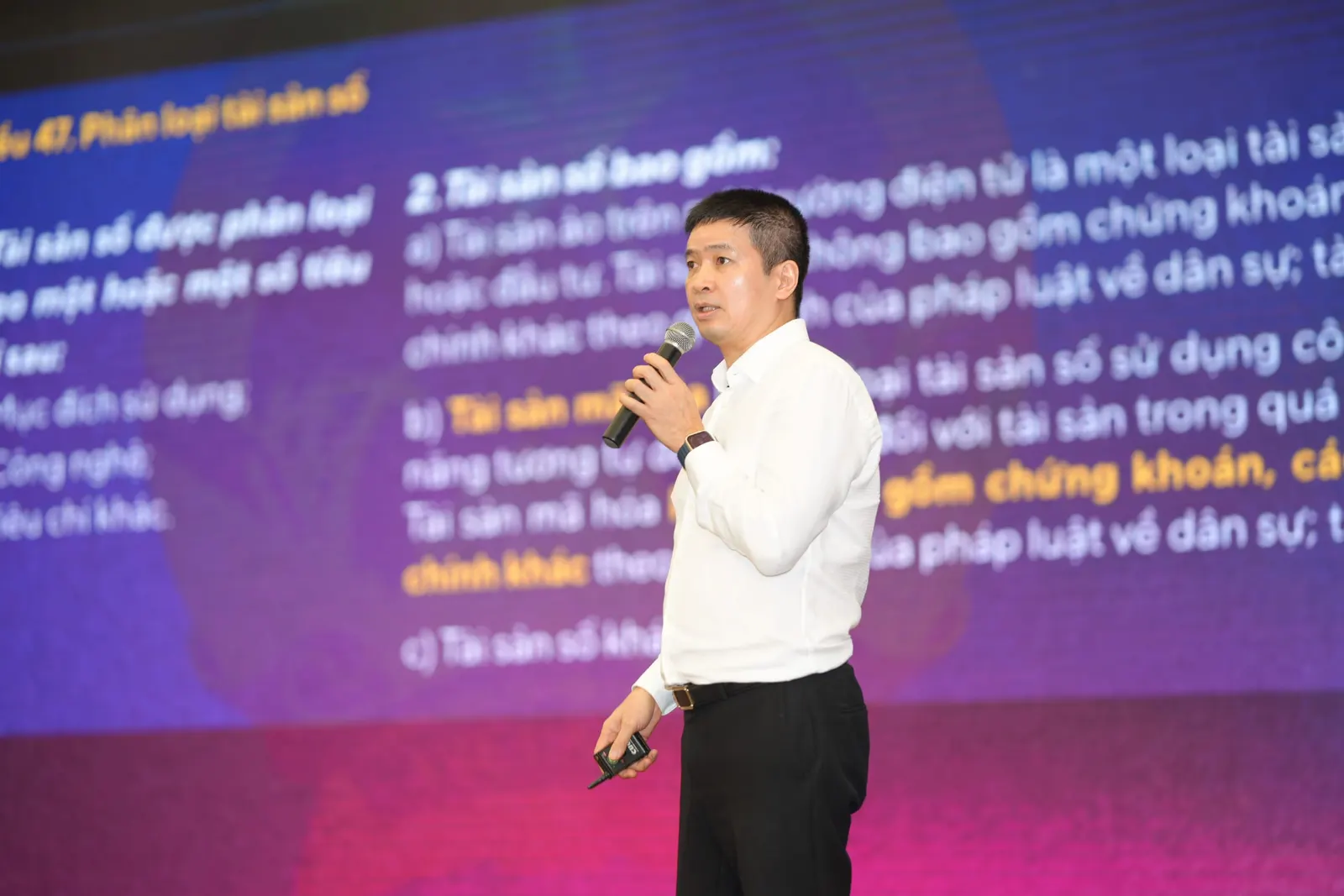
To build the “Make in Vietnam” blockchain network, VMatrix is investing heavily in the foundation phase, aiming to ensure data sovereignty and put Vietnam among the leaders in digital technology.
In an interview with VietTimes magazine, Mr. Phan Duc Trung, Chairman of the Vietnam Blockchain and Digital Assets Association (VBA) and Chairman of the Board of VMatrix, shared the journey of building the Vietnam Multi-Blockchain Service Network (VBSN) and his aspiration to put Vietnam among the world's top 3 blockchain networks.
The journey to a Make in Vietnam blockchain
At the 6th National Forum on Digital Technology Enterprise Development (January 2025), General Secretary To Lam presented One Mount Group with a symbolic emblem entrusting it with developing the “Make in Vietnam” Layer 1 blockchain network, a strategic national digital infrastructure. In your view, what was the basis for the company's selection, and what does this event mean for Vietnam's blockchain industry?
- This project did not begin with a company, but with a national vision. Before VMatrix was founded, the idea of a Vietnam Multi-Blockchain Service Network (VBSN) had already been conceived while drafting the “National Blockchain Strategy,” prepared by the Ministry of Information and Communications (now the Ministry of Science and Technology) and the Vietnam Blockchain Association. The Government issued this strategy in Decision No. 1236 on October 22, 2024, setting the goal of developing blockchain as national infrastructure serving digital transformation, digital government and the digital economy.
In preparing, we studied in depth the leading national blockchain models in the world: Estonia's X-Road, the European Union's EBSI and China's BSN. Estonia, a country of just over 2 million people, pioneered the use of blockchain in e-government very early, even before Bitcoin existed. With a fast, lean and effective approach, Estonia has become a model that inspires all of Europe on its digital transformation journey. The EU developed EBSI to serve electronic passports, creating a common “e-ID” for 27 countries. China developed BSN, a national blockchain network that combines the State, telecom groups and six major banks.
At first, many people worried that BSN was about controlling privacy. But after going there to see for myself, I found that they do it very methodically and with a long-term vision, just as they were ahead earlier in robotics and electric vehicles. While the world was still discussing 6G, China had already identified blockchain as the core foundation of the digital economy.
After the two ministries merged, the Vietnam Blockchain Association continued to propose building a “Make in Vietnam” national blockchain network. On January 15, 2025, I presented the proposal to the leadership on behalf of the Association and reported directly to the General Secretary. Fortunately, the project received the support of Techcombank and many other committed organizations. From there, the project was approved and One Mount Group was entrusted with carrying it out. To realize the goal of “Make in Vietnam” national digital infrastructure, One Mount Group set up a subsidiary, VMatrix Joint Stock Company, with the mission of developing a Layer 1 blockchain network controlled by Vietnamese.
Having worked with many international chief blockchain architects and studied X-Road (Estonia), EBSI (EU) and BSN (China), what do you see as the most important lessons for Vietnam to take advantage of coming later and avoid the mistakes of those who went before?
- I remember that during implementation, an international consultant joked: “If Vietnam pulls this off, it could rank in the world's top 3, even number 1, for service blockchain networks.” It sounded very proud, but also pressured, because the scale and technical requirements of this project are truly enormous. But that gave me the chance to meet and exchange views with many international chief blockchain architects. They shared very candidly, not only about their successes but also about the “naivety” of their early days in how they named their networks.
Vietnam has a great advantage: “coming later but heading in the right direction.” We can learn from earlier models such as Europe, China and Estonia, avoid trial and error and shorten the timeline. VMatrix could be said to have “come along at the right time” (laughs), but this is not random luck. It is the result of long preparation and steadfast commitment to a clear vision: building a blockchain network for national data sovereignty.
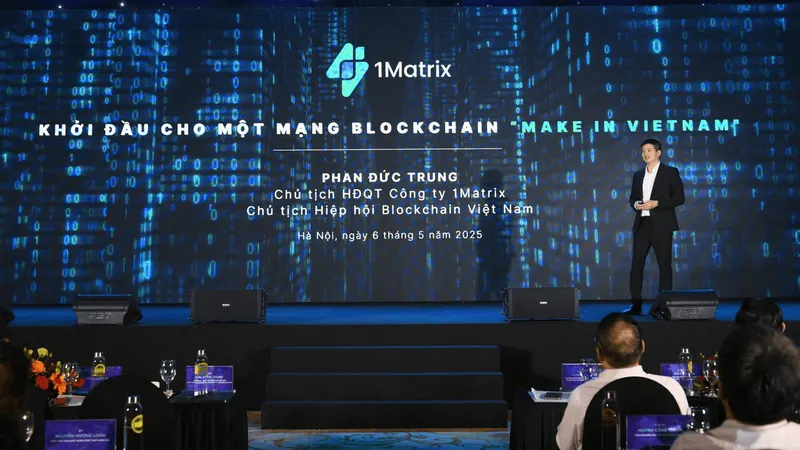
“Burning money” to lay the foundation of Vietnam's blockchain network
Blockchain requires decentralization yet must still ensure data sovereignty. In your view, which model balances these two factors and keeps the network running sustainably?
- We are investing very heavily, you could even say “burning money,” in the foundation phase. But my greatest wish is that once the network runs stably, it will be handed over to operate under a public-private partnership (PPP) model. This model helps the State ensure data sovereignty and strategic direction, while the private sector acts as the leader in technology, creativity and operational optimization. That both reduces the burden on the state budget and ensures the pace of innovation and transparency.
Blockchain is infrastructure, so it has no direct revenue. Its real value lies in three pillars: reducing operating costs, increasing labor productivity and promoting the digital economy. The central goal the Vietnam Multi-Blockchain Service Network is working toward is a foundational digital infrastructure that ensures data sovereignty and raises the economy's efficiency in a secure way.
In reality, building a blockchain is easy; sustaining an ecosystem that works is hard. What will VMatrix do so that this blockchain truly operates in the digital economy rather than remaining an experimental technology product?
- Luckily, we “live with the rich”; otherwise we would probably have had to run off and “sell tokens.” In fact, without the support of large businesses, this project could hardly keep running. VMatrix is currently receiving strong support for cloud infrastructure from partners such as Amazon Web Services and CMC. I recently shared with the Ministry of Science and Technology that this is an extremely important strategic step that needs Government support, similar to how China rolled out 100 clouds nationwide to run the BSN network effectively.
In fact, maintaining even a single blockchain “node” is very costly. So in the early stage, national infrastructure and data policies are needed to support it, with a gradual shift to market mechanisms afterward. I often joke: “The network only goes down when… the money runs out.”
Timeline shortened by 50%
After several months of implementation, what concrete results has the project recorded?
- The initial results have far exceeded expectations. First, internal reports show the implementation schedule has been shortened by about 50% against plan. Second, the project has drawn active participation from domestic businesses. Techcombank was the first to pilot an application; several educational institutions have also run trials; the Ministry of Industry and Trade connects through the VNeID platform to support information verification. Overall, the banking group is the leading and most determined force, because banks are both at the forefront of digital transformation and a central link spreading the blockchain ecosystem across the economy.
With such a fast pace of implementation, which regions and sectors will be prioritized for the first pilots so that the national blockchain network can truly deliver?
- We have identified three priority focus areas. The first is Da Nang, a locality at the forefront of digital transformation, with a proactive spirit and a willingness to experiment. The city wants to apply blockchain to administrative management, finance and innovation. However, the biggest challenge here is a shortage of human resources, so we have to work, train and standardize the workforce all at once. The second is the public administration sector, which is “thirsty” for digital transformation personnel and badly needs a transparent data authentication platform that prevents forgery and fraud.
The third is finance and banking and large enterprises, where blockchain can create immediate value, from transaction authentication and process optimization to data safety. Many large enterprises such as Vingroup, SHB, Dragon Capital and international partners have proactively joined. Even KuCoin, one of the world's nine largest exchanges, is cooperating with us, because they see an opportunity not only in blockchain technology but also in digital assets, one of the most important applications of blockchain in modern finance.
I always stress that blockchain is a multi-industry application technology, while digital assets are a specialized application of blockchain technology in finance. If this boundary is understood correctly, Vietnam can move very fast and go far.
Blockchain is not a “magic wand”
Many large corporations have failed despite investing billions of dollars in blockchain. In your view, what are the “hard-won lessons” for Vietnam to avoid repeating those mistakes when building a national blockchain network?
- First, small businesses should not use blockchain, because investment and operating costs are too high. If the ecosystem is not broad enough, the project will “die young” very quickly. Second, blockchain is not for those who want absolute power. The essence of this technology is consensus and sharing, not control or domination. If someone wants to control everything without having contributed anything, that system certainly cannot last. Finally, one must understand that blockchain is not a “magic wand.” It does not fully replace centralized databases but runs in parallel with existing systems. The original data still sits in centralized repositories, while blockchain stores only the part used to authenticate and reconcile, ensuring the transparency and uniqueness of information.
Putting all data on-chain is not feasible, because each piece of information would be replicated across thousands, even tens of thousands of servers, driving costs up exponentially. So only truly valuable data should be written to the chain.
I often tell my engineers: “The Internet is a network for transmitting information, while blockchain is a network for transmitting value.” The Internet lets information flow in both directions, while blockchain lets value circulate and be verified as unique. That is the fundamental difference, and the reason blockchain is not just a technology but the foundational infrastructure of the future digital economy.
For blockchain to become the foundational infrastructure of the digital economy, which policies should the Government prioritize in the near term, especially for data infrastructure and human resources?
- I only hope for two things: investment in data infrastructure and in people. Specifically, there should be income tax incentives for high-tech experts, especially Vietnamese ones. Currently, foreign experts enjoy greater tax incentives, while skilled Vietnamese talent faces higher tax rates, leading to brain drain. Just two policies, open data infrastructure and tax incentives for high-quality human resources, are enough for Vietnam's blockchain industry to develop sustainably.
Looking ahead, where do you see Vietnam on the global blockchain map? And what role will VMatrix play in the journey of taking “Make in Vietnam” technology to the world?
- I believe Vietnam can absolutely climb into the world's top 3 blockchain networks if we stay steadfast on the path we are on. VMatrix will be known as a pioneering enterprise that dares to think, dares to act and dares to invest in a mission of national scale. However, to realize that goal, corporate effort alone is not enough. We need the support of the State, the Association and international organizations, to share a common vision that blockchain is national digital infrastructure. When everyone believes in that, Vietnam will create enough combined strength to step onto the global stage.