

If the pilot crypto asset exchange model performs effectively, opportunities will extend beyond exchange development to supporting services such as blockchain infrastructure, digital asset custody, digital identity, data verification, compliance and risk management.
Vietnam is preparing to pilot a digital asset exchange, a move expected to mark progress in building a legal framework for this new field. Speaking with a reporter from Economy & Environment Magazine, Mr. Nghiem Minh Hoang, FinTech Application Expert at the Vietnam Blockchain and Digital Assets Association, analyzed the significance of the pilot mechanism, the challenges it raises and the market's prospects in the period ahead.
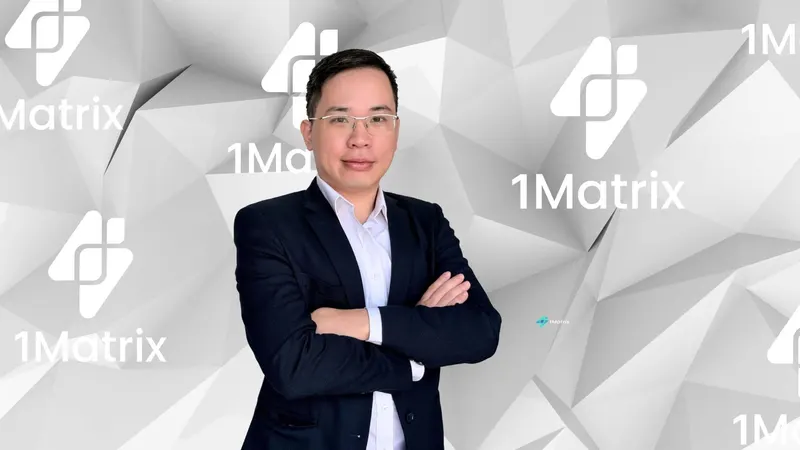
Mr. Nghiem Minh Hoang, FinTech Application Expert, Vietnam Blockchain and Digital Assets Association.
Vietnam is preparing to pilot a digital asset exchange. In your view, what does this mean for building a legal framework for the digital asset market in Vietnam?
- I believe the upcoming pilot of a digital asset exchange is very important for building a legal framework for the crypto asset market. The core point is that Resolution No. 05/2025/NQ-CP, dated September 9, 2025, created a five-year pilot mechanism for crypto asset exchanges. In other words, the State is no longer limiting itself to research and observation; it has begun to set up a real-world testing framework to validate policy.
From an institution-building perspective, the greatest value of the pilot mechanism is that it keeps lawmaking closer to practice. Through implementation, regulators will have a basis to assess core issues such as the scope of regulated assets, conditions for organizing trading, supervision mechanisms, information transparency obligations, and requirements for cash-flow control and risk prevention. In other words, the pilot is not the destination but a necessary stepping stone toward a fuller and more workable legal framework.
I see this approach as both cautious and proactive. It is cautious because the State is moving step by step within a controlled scope; it is proactive because it has begun laying a legal foundation from operating experience.
Today, Vietnamese people trade digital assets mainly on international platforms, without formal regulation. What problems could a domestic exchange pilot help solve?
- This is a reality we must acknowledge frankly. While Vietnamese trading in digital assets continues on international platforms, domestic regulators face considerable difficulty observing transactions, tracking cash flows and determining the legal responsibilities of the parties involved. I therefore believe a domestic exchange pilot can deliver clear benefits in three respects: greater transparency, better management and stronger investor protection.
First, on transparency: when transactions go through service providers within the pilot framework, licensed and supervised domestically, requirements for information disclosure, accountability and operating standards become far clearer. Resolution No. 05/2025/NQ-CP also sets the principles of safety, transparency and efficiency, and requires that disclosed information be accurate, truthful, complete and timely.
Second, on cash-flow management: under the pilot, the offering, issuance, trading and payment of crypto assets must be conducted in Vietnamese dong (VND). This rule improves the ability to monitor and control cash flows, compared with funds moving across multiple platforms outside direct oversight. Participants must also comply with regulations on anti-money laundering, countering the financing of terrorism, information security and data protection.
Third, on investor protection: with a domestic exchange, investors will have a clearer legal basis to determine their rights and obligations and to seek protection of their interests when disputes arise. Resolution No. 05 also sets out the principle of protecting the lawful rights and interests of organizations and individuals participating in the market.
Of course, a domestic exchange pilot cannot immediately resolve every risk in the digital asset market, but it is a necessary step toward bringing trading gradually into a more transparent framework.
In your view, what are the biggest challenges in implementing the pilot digital asset exchange model?
- I believe the biggest challenge lies not in the technical framework but in the capacity to operate a market within a new regulatory framework. The first issue is human resources. A digital asset exchange cannot run effectively with a technology team alone; it needs people who can bridge blockchain technology, market operations, compliance management and coordination with regulators.
The second major challenge is market liquidity. For a pilot to be assessed on its real effectiveness, it needs enough transactions to reflect market behavior. In the early stage, however, participants and operating conditions will inevitably be limited, so a suitable balance must be found between regulatory requirements and the ability to build liquidity.
As for risk management, anti-money laundering and technology security, these are mandatory conditions that any asset exchange must take seriously. Resolution No. 05 requires compliance with regulations on anti-money laundering, information security, cybersecurity and data protection.
What international experience can Vietnam learn from?
- I believe Vietnam can draw on international experience, but selectively rather than by copying a model wholesale. In the region, Hong Kong (China) and Thailand are two notable cases, as both acknowledge market demand while placing trading under conditional regulatory frameworks.
Hong Kong's main lesson is a clear licensing and supervision regime for virtual asset trading platforms, together with a public list of licensed exchanges. I believe Vietnam can learn from this, since it makes clear which entities may operate and how they are supervised.
Thailand, meanwhile, stands out for its fairly clear classification of digital asset business types and its public warning mechanism for unlicensed entities.
If the pilot succeeds, how could Vietnam's digital asset market develop?
- I believe that if the pilot succeeds, Vietnam's digital asset market will go beyond trading crypto assets such as Bitcoin or Ethereum and move into a phase of deeper applications, notably real-world asset (RWA) tokenization. This trend is growing strongly worldwide and is projected to reach about USD 19 trillion by 2033, according to Ripple and Boston Consulting Group.
The market would then revolve not only around buying and selling digital assets but could expand into models tied to the real economy, such as tokenized bonds, income-generating real estate or other financial assets.
For technology startups, if the pilot model operates effectively, opportunities will lie not only in developing exchanges but also in many supporting services, such as blockchain infrastructure, digital asset custody, digital identity, data verification, compliance and risk management.