

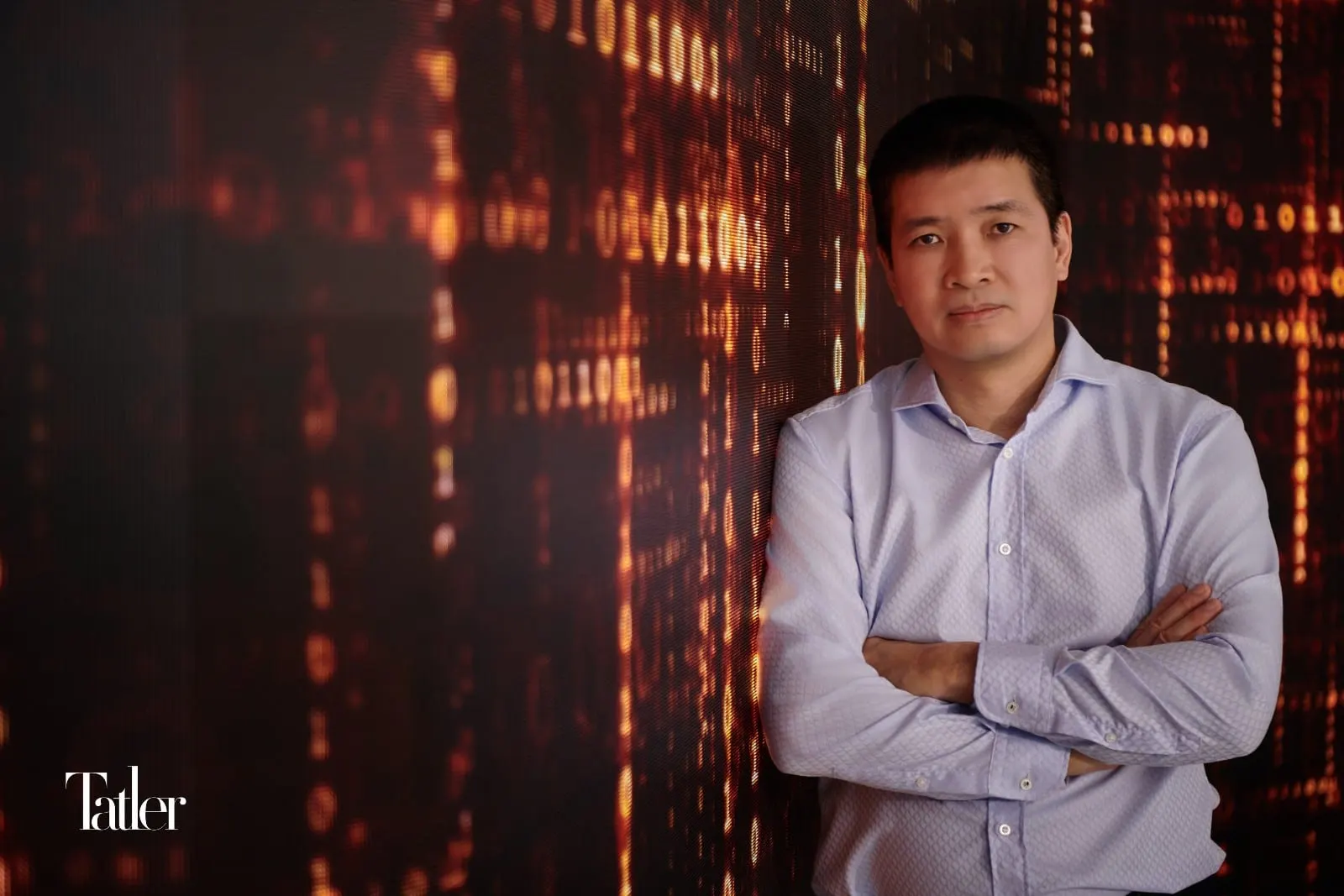
According to Tatler, Mr. Phan Duc Trung, architect of Vietnam's blockchain market, is a blend of seasoned financier, technology expert and thinker.
Mr. Phan Duc Trung arranged to meet me at the headquarters of the Vietnam Blockchain and Digital Assets Association (VBA), home to a statue of Satoshi Nakamoto, the creator of Bitcoin. Before becoming Chairman of VBA and Chairman of VMatrix, two of the most important organizations in Vietnam's blockchain industry, he worked in banking and finance. What makes him most interesting is his role as a bridge between the world of traditional finance and the modern world of blockchain. He is also seen as an architect of Vietnam's blockchain financial market.
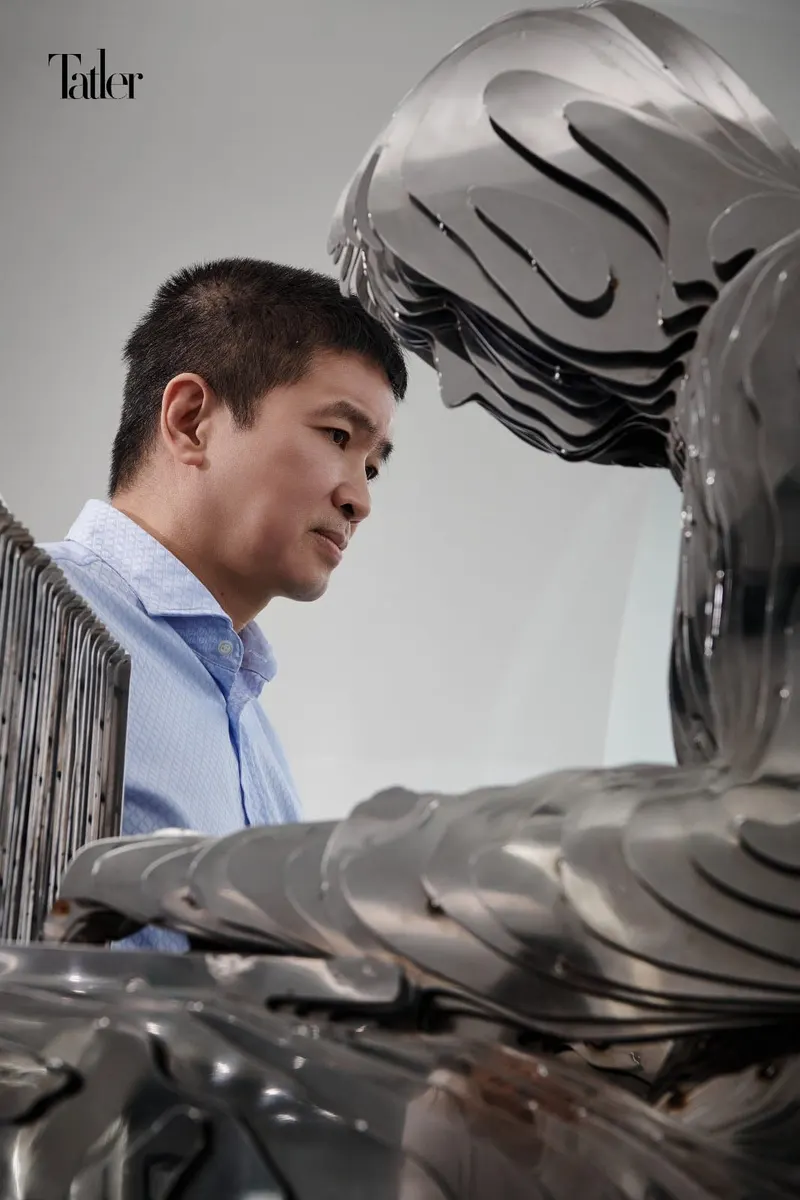
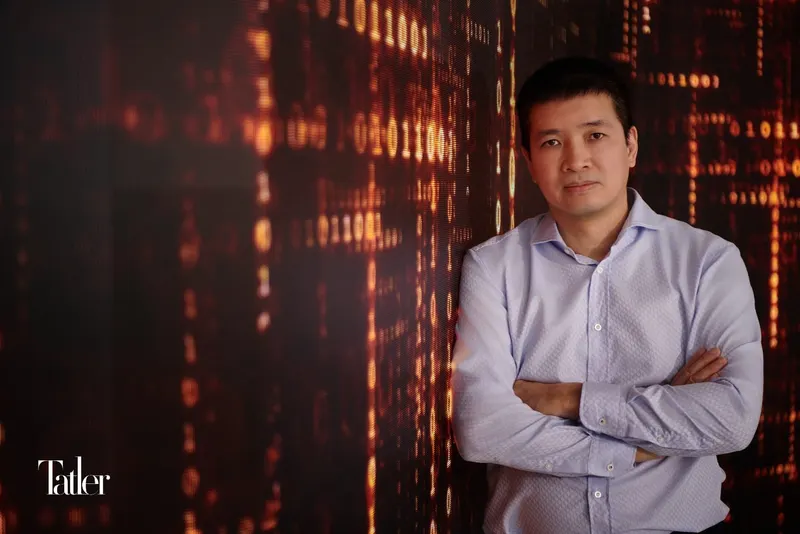
Mr. Phan Duc Trung, Chairman of the Vietnam Blockchain and Digital Assets Association (VBA) and Chairman of VMatrix.
If you had to describe yourself with an image from the world of finance, what would you choose: architect, pioneer or bridge-builder?
- From the start, I positioned myself as a bridge. I have always pictured blockchain and traditional finance as the "Wild West" and the "white-collar East," two worlds that need to engage with each other. Someone has to stand in the middle and act as interpreter for both sides. In fact, I came up with the idea of "East" and "West" very early on. In finance, technological innovation has long been regarded as central to development. In the past, large corporations tended to see finance as the leading function. Later, even within the financial industry itself, technology became a true pillar. From my observation, since around 2010 the banking sector has begun to treat technology as the bridge: the foundation that drives innovation.
After a long career in financial leadership, you took a fairly long break. Was that a deliberate decision or an unexpected change of direction?
- Honestly, I had not planned to take a break at that time. But that was when I realized finance is not only about technology. It also rests on other foundations: law, risk management and the scale of the system. After that I went to the United States and worked in a rather particular field, retail home lending, and I was genuinely surprised. It turned out that everything I had understood about consumer lending in Vietnam for decades was not how the world operates. I began to look back and think more seriously about microfinance in general. I knew that, sooner or later, this field would change.
I used to think that a consumer loan or a car loan would stay on the bank's balance sheet. But in the United States I found that, with home loans, banks quickly package them and sell them to intermediary institutions such as Fannie Mae and Freddie Mac, which securitize them further and distribute them to the market. Through this mechanism, most of the credit risk moves off the bank's balance sheet, rather than being "locked in" as in the traditional model in Vietnam. From that I understood that the securities market plays an extremely important role: it allows the entire system to sit off the balance sheet. Another thing in the United States is that people could conduct peer-to-peer transactions very early on, even in real estate. This model has existed for a long time, and they manage it tightly through legislation.
I began to take a deeper interest in the nature of loans: what a home loan is, what a subprime loan is, and why there are still standards within the subprime category. And I realized that technology is what will solve the problems that traditional banks cannot or will not solve.
Banks still matter, but they need to sit a little lower. Many people in the industry are sitting too high. They touch only the attractive part of society, while the lower part, with more risk, is overlooked. Yet that is exactly where real demand and real innovation are happening. From small things like these, I began to think differently about finance: no longer as just numbers or a balance sheet, but as the way people accept and distribute risk in society.
Beyond the limits of models or technology, what fundamental weakness do you see in today's financial system?
- Financial costs are too high, and sooner or later the system will have to correct itself. This is not unique to Vietnam; it is true of almost every economy. The essence of credit is a mechanism for allocating capital. It creates buffers that let monetary policy operate more flexibly. In this process, commercial banks are the beneficiaries, through a funding mechanism guided by the State Bank of Vietnam. However, banks will be forced to apply more technology (or partner with technology organizations) to reduce intermediary costs across the whole system. The financial cost of small transactions, for ordinary people, will also have to come down.
On the other side, blockchain is the technology capable of addressing the structure of microfinance, where small transactions take place and where banks do not reach. That is the part of the economy where banks are absent, and also where technology can fill the gap. I believe technology will help banks and businesses stand on more equal terms when it comes to the cost of capital.
In your view, where does the financial essence of blockchain lie?
- CZ once said: "The internet is a network for sharing information, and blockchain is a network for sharing value." If the internet lets information flow, then blockchain is the infrastructure that lets value flow. Understood this way, you can see that the nature of banking technology already contained that spirit, the difference being that blockchain does it in a more decentralized and transparent way.
I still believe blockchain is a network for sharing value. With any project running on blockchain, I always ask myself: does it have value? If not yet, will it have value tomorrow? If it has value now, will that value still hold tomorrow? I always keep a skeptical attitude toward value, because it helps me see the essence clearly. Value only means something when it changes: if it never changes, it is no longer value.
Could you briefly describe VMatrix, the company you chair?
- VMatrix is an effort to turn the idea of a national blockchain network into reality. While helping to advance the Ministry of Information and Communications' 1236 strategy, I asked why Vietnam could not build a blockchain network the way Europe has EBSI or China has BSN. China has enormous resources and can build a national-scale blockchain network. BSN was initiated by four organizations in the state, telecommunications, payments and technology sectors, but its deployment ecosystem and core applications are led by China's state-owned banks. All of them are billion-dollar enterprises. In Vietnam, I understood that we cannot follow that model because it is too costly, but we can learn from its spirit: building a valuable blockchain infrastructure for the country, so that it can master the technology.
In Vietnam, VMatrix has two goals. The first is to reduce the operating cost of digital systems, because the State needs an infrastructure that all parties can use together. The second is to create a shared foundation of value on which businesses, organizations and individuals can build digital services, without depending on foreign providers. The main goal is to create companies with practical applications that provide infrastructure and useful services for Vietnamese businesses. For example, VMatrix can provide a platform for companies and member organizations of VBA, or for funds such as Dragon Capital.
Do you see a national blockchain network as something like the State building a road, with businesses and citizens traveling on it together?
- It is a kind of public infrastructure, similar to the State building a highway so that everyone can travel on it and benefit. When the State invests in infrastructure like this, society as a whole saves on operating costs and on "cold" costs, meaning system costs and trust costs.
The concept of a national blockchain network is not only about technology; it is an organizing philosophy. It is about how a country defines digital value and governs it. If the State builds it, it must be open enough for the private sector to participate. If the private sector builds it, it must be trustworthy enough for the State to use. That is the problem VMatrix wants to solve: a national network that is fair, efficient and genuinely sovereign in the digital sphere. Your vision was very clear from the beginning: to create a market. And the most important framework for a market is the legal framework. Could it stifle the market?
The purpose of building a legal framework for transactions is to ensure safety. First, we must recognize that technology is something criminals love, because technology allows them to do so many things. And ideally, technology is something that needs no legal framework.
Looking back at history, Bitcoin began as a network for people who wanted absolute freedom, to the point that its founder never revealed himself. WikiLeaks once called for donations in Bitcoin. And Satoshi himself warned that if it moved too fast, Bitcoin's development would collide with the law.
On the internet, the line between ordinary people and criminals is very blurry. Law exists to create a uniform environment, not to divide right from wrong. Law is for people to behave consistently, not to flatten everything. Bitcoin was once seen as a place for money laundering, which is why Monero (XMR), the currency of criminals, came into being afterward. But Monero has its own logic: criminals can spend among themselves without trouble, but exchanging into ordinary money carries risk, because the person exchanging may reveal themselves as a criminal. Without law, the world would become so flat that people without technology would be at a disadvantage compared with those who have it. That is why we need law to shape a new order.
You have said that Vietnam is in a very special position to take advantage of blockchain and digital assets. You have also used the concept of blockchain efficiency as a way to redefine the role of this technology.
- Yes, I see Vietnam in a very special position. The dream of becoming Asia's financial center is too far off, but becoming a financial center for Southeast Asia is entirely feasible. If this market has begun to form, even in its early days, it remains fertile ground with real potential. I believe blockchain will make capital markets flow more smoothly. In fact, every type of asset can, in essence, be "tokenized." When that happens, every kind of asset can take part in the capital markets, including things that could not before.
What future do you see for RWAs? Which directions or approaches would be feasible in Vietnam?
- In my view, the starting point for RWAs (tokenized real-world assets) must always go through the Government. It is always so. When the Government gets involved, it creates a brand for the country, showing that the country understands and embraces RWAs. All forecasts point to very strong RWA growth. In essence, it is the next step in a chain of development: monetization → securitization → tokenization. Tokenization means everything can be divided into smaller parts and traded. That separates the custody of an asset from its trading. Take the gold market: two countries both keep their reserve gold in the United States. But trading between them happens almost instantly. That is thanks to technology.
RWA technology works the same way. It increases liquidity for real assets, and everyone likes liquidity. Buying a house you cannot sell is uncomfortable. RWAs push this further: they let real assets be traded and move faster.
What market trends do you see globally, and where will Vietnam stand in that picture?
Phan Duc Trung: In global finance, I think the first point of change is always stablecoins. Now China is building a CBDC and the United States has stablecoins, and in essence the two are quite similar. On one side (CBDC), the government itself issues digital money. On the other (stablecoin), the private sector issues it, but it is still backed by real assets, such as USD or government bonds. One prints money, the other keeps money in a vault; in essence they are two sides of the same coin.
This will lead to changes in the structure of global asset holdings. For example, China and Japan have been buying US government bonds, while Tether (USDT), a private organization, is now one of the largest holders of US government bonds in the world, ahead of South Korea or the UAE. Tether boasts that it holds more US government bonds than an entire country, and that is in fact the case. The US government is gradually accepting them as part of the financial ecosystem.
I think US government bonds will continue to be used as reserve assets for stablecoins, and this process will happen extremely fast. After stablecoins, the next trend will be high-value, stable assets. Second are assets with high yields but poor liquidity, such as high-grade bonds and investment products reserved only for the wealthy. RWAs will make those assets more accessible and more liquid.
For Vietnam, how do you expect these developments to unfold?
- Within the region, APAC is one of the fastest-growing regions for crypto and blockchain. Vietnam is part of that region, and crypto capital inflows into Vietnam have reached about USD 220 billion, third in the whole of APAC, which is very impressive. However, the real impact of RWAs or blockchain in Vietnam will still depend on each country, on how it defines and applies them. Distributed technology only makes sense when there is a large enough user base. Otherwise, it remains just a trend.
If blockchain develops properly, it will strongly support Vietnam's financial structure, especially in microfinance. It helps increase productivity and reduce transaction costs. In China, models such as WeBank and Ping An's OneConnect are examples. WeBank takes only 5 seconds to disburse a personal loan and 15 minutes for a business loan. Ping An is a micro-insurance group valued at more than USD 140 billion.
A country with a billion people, a large and poor population, had to jump straight into technology, and they succeeded. So Vietnam does not need to talk about distant visions; it should simply look at what works and get on with it. Microfinance and small-scale markets are where blockchain creates real change. As for the second area, handling data and privacy, that is Europe's playing field.