

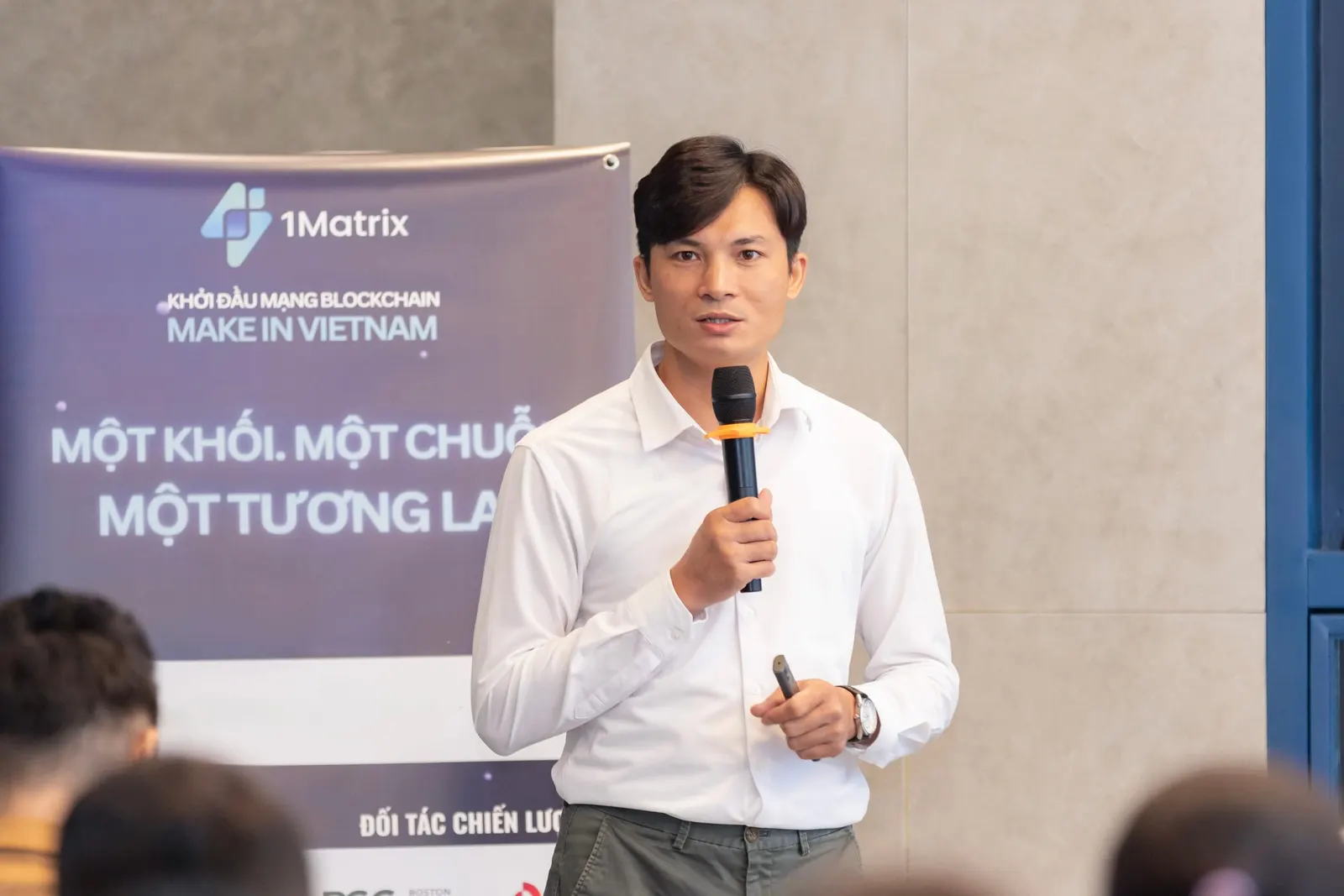
According to Dr. Do Van Thuat, Director of Blockchain Solutions & Architecture at VMatrix, Vietnam's blockchain industry is changing in a very positive way, and in just two to three years there could well be many more tech unicorns and standout projects making a clear mark in driving economic growth.
Many blockchain projects developed by Vietnamese have made their mark in the international market, showing that Vietnam's technology capability can fully compete in the global arena. On policy, documents such as the National Blockchain Strategy, the Law on Digital Technology Industry and the draft regulations piloting crypto asset exchanges are gradually shaping a clearer and more transparent legal framework for the sector. In parallel, the strong entry of major groups such as FPT, Viettel, Vingroup and Techcombank is helping lay the foundation for a blockchain ecosystem with a distinctly Vietnamese identity.
To shed more light on the new developments in Vietnam's blockchain landscape, Investment and Finance Magazine - VietnamFinance spoke with Dr. Do Van Thuat, Director of Blockchain Solutions & Architecture at VMatrix.
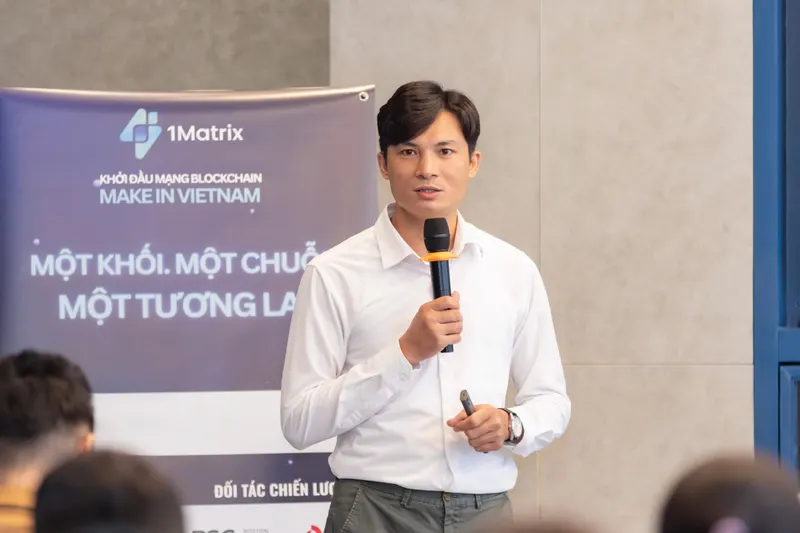
Dr. Do Van Thuat, Director of Blockchain Solutions & Architecture, VMatrix.
Where does Vietnam currently stand on the global blockchain map?
- Vietnam is among the top five countries with the highest rates of people adopting and owning crypto assets in the world, at 17%, about three times the global average of 6–6.5%, according to a report by Triple-A. The latest Chainalysis data also show that crypto flows into Vietnam reach hundreds of billions of USD each year.
However, in reality Vietnam is still only a consumer market for foreign products and services, without many major products or standout applications. According to unofficial figures, as much as 95% of Vietnamese crypto transactions take place on unlicensed foreign exchanges, and most applications are “quick-buck” in nature, even junk or scam applications.
Meanwhile, the number of blockchain products and projects developed by Vietnamese that have achieved major success and been recognized by the world can be counted on one hand, such as Kyber Network or Axie Infinity (the play-to-earn game by Sky Mavis). These are billion-dollar projects with global names, a source of pride for Vietnam's blockchain industry and proof of the talent of Vietnamese technology engineers.
However, since mid-2024, the picture of Vietnam's blockchain technology industry has changed quickly and for the better as state regulators have paid more attention. The first and most notable milestone was the Government's issuance of the National Blockchain Strategy under Decision No. 1236/QD-TTg dated October 22, 2024, which sets the goal that by 2030 Vietnam will be among the regional leaders and have an international standing in the blockchain industry.
Then came a series of important documents guiding new technology sectors and promoting innovation and economic growth, such as Resolution No. 57-NQ/TW and Resolution No. 68-NQ/TW of the Politburo. In June 2025, we saw the birth of the Law on Digital Technology Industry, which for the first time officially recognizes digital assets and crypto assets. At the same time, the draft Decree piloting centralized crypto asset exchanges is also being actively drafted and submitted to the Government for consideration, and is drawing great attention from the community.
Thanks to the support and determination of legislators, the domestic blockchain market has become far more vibrant. Companies that once dared only to develop technology quietly now dare to go public, boldly share ideas, raise investment and announce product roadmaps in the mass media.
It can be said that Vietnam's blockchain industry is changing in a very positive way, and in just two to three years we may well have many more tech unicorns and standout projects that make a clear mark in driving economic growth.
Following what you said, the blockchain industry is seeing many positive changes. So what are the key factors for “Make in Vietnam” blockchain projects to go far?
- We now have the Law on Science, Technology and Innovation and the Law on Digital Technology Industry, which cover crypto assets and blockchain technology, and which the State has identified as strategic and key national fields.
The legal foundation is clear and favorable, and Vietnam's talented technology engineers are ready. Only “one more tree to join the others and form a tall mountain” remains: a strong, long-term investment commitment from the government and domestic businesses, focused on policies to reward talent, equipment procurement, technology and market research, and promoting cooperation and business.
This requires smooth, sustained and synergistic coordination between the State and private businesses to push forward major “Make in Vietnam” blockchain projects and lift Vietnam's blockchain industry to the top ranks of the world.
Today we have already seen many big names voice their support for blockchain technology. In the future, we expect more leading groups to enter the market, such as Techcombank, Vingroup, Viettel, FPT, HDBank and others.
Compared with other countries in the region, what advantages does Vietnam have for developing blockchain projects?
- Vietnam came later, but has quite a few advantages that let it catch up quickly and even move ahead in the global blockchain and crypto asset market.
First, the biggest advantage is a large pool of programmers and blockchain engineers who are eager to learn and quick to pick up new technologies. We already have many world-class projects (Axie Infinity, Kyber Network), as I mentioned above, and many technology talents recognized globally.
Second is low development cost. Compared with countries such as Singapore, Thailand, South Korea or Japan, the cost of deploying a blockchain project in Vietnam is many times lower, largely because salaries for technology engineers in Vietnam are far lower than the regional and global average. This is an extremely important cost advantage during blockchain research and development and while testing and refining products, when a project has no revenue yet and may not even have raised outside capital.
Third is a high level of acceptance of advanced technology and readiness for change. Young Vietnamese tend to be quick and ready to try new technologies. Proof of this is that Vietnam ranks among the top countries in crypto adoption, with 17 million people owning crypto assets. This creates an ideal testing market for “Make in Vietnam” blockchain products.
Finally, the legal framework for blockchain, digital assets and crypto assets is being completed quickly and positively, in a spirit of supporting business innovation, with many important legal documents as I mentioned above.
The combination of these factors, in my view, is an excellent launchpad for Vietnam's blockchain market to break out strongly in the next three to five years.
Many people say the first-generation DeFi and GameFi wave has passed and the next trends will be SocialFi, AI x blockchain or RWA. In your view, what is the next big opportunity for Vietnamese blockchain projects?
- The FOMO (fear of missing out) wave among investors for DeFi and GameFi has passed, but the market is still there, increasingly mature and developing more strongly. The Law on Science, Technology and Innovation and the Law on Digital Technology Industry have created a solid legal foundation, throwing open opportunities for all Vietnamese blockchain projects that are “honest in word and deed.” Many new fields are gradually being regulated and guided clearly, with favorable policy mechanisms for business development.
Under Decision No. 1131/QD-TTg of the Prime Minister, blockchain is identified as a strategic technology, and specific applications are identified as national strategic technology products, including: blockchain network infrastructure, digital assets, digital currency and cryptocurrency, and traceability systems.
I believe these are the trends that businesses and individual investors should watch in the coming period.
On blockchain network infrastructure, VMatrix and partners such as Sotatek, NCC and AlphaTrue are actively working to deliver comprehensive solutions soon to enterprises and to public and private service organizations. Public service organizations can fully apply blockchain to solve problems in digital identity, degree management, health records and more, in line with global standards, so that they can catch up early and become a growth driver of the digital economy.
On digital assets and crypto assets, we are especially interested in RWA (real-world asset tokenization). Major businesses around the world are particularly interested in this field, which is forecast to account for one-tenth of global GDP by 2033 (about USD 19 trillion) thanks to its high liquidity, easy access to global markets and being backed by real assets.
Finally, blockchain applied to supply chain management, traceability and e-commerce is also a promising field and is identified in the List of Strategic Technologies and Strategic Technology Products.