


The platform integrates an agentic AI model, enabling the system not only to answer questions but also to analyze requests, plan how to handle them and coordinate multiple tools within a single workflow. AI Justiva is trained on a dataset specialized for Vietnamese law, including more than 2 million published court judgments and more than 400,000 standardized legal documents. As a result, the AI can understand legal context, identify relevant provisions and deliver results with clear source citations, making it easy for court staff to check and cross-reference.
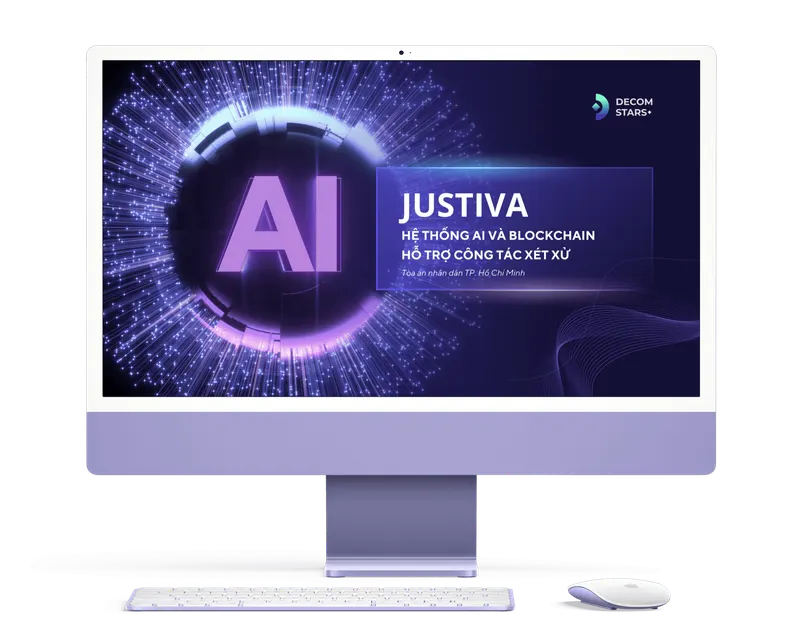
The entire workflow is designed on a human-in-the-loop principle: AI plays only a supporting role, and the final decision always rests with the judge. This ensures that technology does not shift legal responsibility, but simply makes the work more efficient.
Justiva integrates five specialized AI agents covering the key functions of adjudication. For legal research, the system quickly finds relevant legal provisions, replacing time-consuming manual searches. For case file processing, it automatically summarizes documents and extracts key information such as the parties involved, claims, evidence and timelines. For drafting, the AI helps prepare judgments, decisions and notices in the correct format, suggesting appropriate structure and content. The system can also map cases visually, presenting the entire course of proceedings, which is especially useful for complex cases.
Pilot results show clear gains: time spent researching legal grounds fell by 60–70%, while clerks' administrative workload dropped by more than 80%.
Another key differentiator of Justiva is the integration of blockchain into its operations. Instead of storing case file content directly, the blockchain records hashes of the data and the full history of actions. Every action in the system, from AI queries to document edits, is logged as a transaction with complete details such as case number, time, user and digital signature. These transactions are linked into a chain, forming an immutable log.
This mechanism makes any unauthorized change immediately detectable. To verify a document, the system simply compares the hash of the current document with the recorded data. If they do not match, an alert is triggered.
Blockchain also supports interoperability between court levels. Higher courts can verify the authenticity of case files from lower courts without relying entirely on the provider, improving the transparency of the system.
For data security, Justiva is designed for self-hosting: all data is processed internally with no Internet connection. The system runs on domestic GPU infrastructure, and data is stored and processed entirely within the Court's control. This eliminates the risk of data leakage associated with foreign AI platforms.
The system is also protected by multiple layers of security, including access control, data partitioning by classification level, end-to-end encryption of storage and transmission, and immutable logging. Every query is checked for authorization before execution and fully logged.
AI model updates are not delivered over the Internet but via encrypted, vetted physical devices, ensuring tight control over the entire system lifecycle.